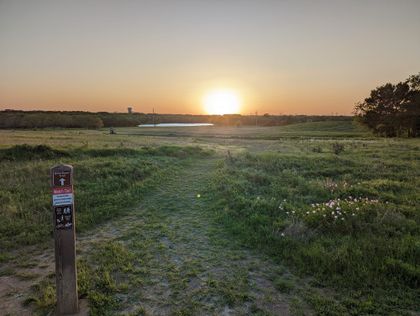
With smoke from wildfires blanketing parts of the eastern U.S. and Canada, and a “heat dome” scorching central parts of the continent, it’s been a rough summer for outdoor exercise enthusiasts. In this episode, Jen and Alex talk about outdoor workouts in less than ideal conditions like heat, humidity, smoke and poor air quality. Should you push through or head indoors? And if you decide to run, bike or hike, what precautions should you take?
Read The Transcript
Alex: Welcome to Practically Fit, Real Fitness Over 40. I'm Alex Johnson.
Jen: And I'm Jen Chamberlain.
Alex: And today we're going to talk about something very timely, and that's outdoor workouts in less-than-ideal conditions — heat, humidity, smoke, and poor air quality. Should you push through these conditions or head indoors? And if you do decide to run, bike, or hike, what precautions should you take?
Feeling the Heat: Texas vs. San Francisco
Jen: You know, Alex, I feel like this is very timely for you right now, because it's what, like 110 degrees in Texas? I've been reading about this massive heat wave you guys have been having.
Alex: Yeah, the past few days it's eased off a bit. But we had what's called a heat dome, which is when the atmosphere traps hot air over the land like a lid — almost like a capsule. There were some parts of the state that hit 115 degrees for days. Oh gosh, it wasn't quite that bad here — I think we got up to about 105, 106. But the worst part was that it was also really humid, so we had these excessive heat warnings for like a week straight. It was miserable. So that's the kind of heat I've been wrestling with the past couple of weeks, along with folks all across Texas and the South. But we've also had this Canadian wildfire smoke spreading across Canada and the U.S., so I felt like this was a really timely topic — and I know it's something you've experienced living in San Francisco too, with wildfires.
Jen: Well, you know, here in San Francisco, we're in our own little protective bubble. We're rarely too affected by heat or smoke — it's a magical little place, except for the fact that it's cold and foggy all summer long. But we do have an interesting weather pattern too, where the high pressure inland pulls cold air in from the ocean and usually keeps the smoke out in the eastern part of the state. Occasionally, though, it does come into town — a couple of years ago we had this eerie red glow, you could barely even see the sun. So it does hit here occasionally.
Alex: Yeah, it looks apocalyptic — that's what was happening in places like New York and Toronto and other cities across the Northeast the past few weeks, and it's still ongoing with these wildfires. It's even gotten to the point up there where people are masking up again. Dare we talk about that on the podcast again?
Jen: I think we should.
Alex: Yeah, well, let's get into it.
Exercising in the Heat: Acclimatization, Heart Rate, and Carbs
Jen: Let's start by talking about outdoor exercise and the heat, since that's something we both have quite a bit of experience with — I'm from Texas, of course, though I live in San Francisco now. I guess the question is: can you exercise in brutal Texas heat? And the answer is yes, but with quite a few caveats. Heat adaptation has been very well studied over the years, and the findings are pretty straightforward. You might not be surprised, Alex, that the military has done quite a bit of research on this, since soldiers don't really have a choice but to exert themselves in the heat. I found a book called Nutritional Needs in Hot Environments: Applications for Military Personnel in Field Operations, and it breaks it down simply: quote, "Humans often exercise strenuously in hot environments for reasons of recreation, vocation, and survival." It's just something we've had to adapt to over the centuries. So how well we're able to do that depends on three things, according to the article: our acclimatization — I always want to call it "acclimation," but it's actually acclimatization — that's how well we've adapted to heat stress, our aerobic fitness, and our hydration level. We all know about drinking more when it's hot out; PSAs have really hammered that message home. But I think the two things that may be less well known are that exercising in the heat dramatically increases the strain on your heart, so you need to lower your intensity to compensate for the fact that your heart's working twice as hard to both keep you cool and maintain whatever activity you're doing. Have you had that experience?
Alex: Yeah, absolutely. I know you and I used to go running at lunch some days at work, and it would be 98 degrees. Living in Texas, this is just reality — maybe not the best idea to go out at noon in the heat of the day, but sometimes you just do it. And the acclimatization piece is really interesting to me too. Having lived here my whole life, I feel like I'm relatively well adapted to the heat, and I never really thought much about it until I married someone from England, where it's not this hot generally. I see the difference when we're exercising this time of year — she really doesn't like it. We talk about it a lot, just how I'm able to go out and do these runs or bike rides when it's super hot, and she can't quite keep up with the pace I'm doing in that kind of heat. So I think this is something that builds over a lifetime, but you and I have also talked about heat acclimation having a yearly cycle to it, where as it starts to get hotter, your body acclimates to the summer. And one thing I've noticed, which is really weird, is that once I'm well acclimated to the heat for the summer, my body seems to respond automatically to any kind of exertion — I could be vacuuming in the house and feel my body temperature rise. It's like my body temperature rises more quickly once I'm acclimated to the heat, which is bizarre. I have no idea what the research says about that, but it's something you and I have noticed and talked about before.
Jen: Yeah, I actually read about this — I was kind of obsessed with the topic of heat acclimatization when I lived in Texas. What happens is your body learns to respond more quickly to heat, so all of a sudden you go through all the things that help you keep cool: sweating more, and your blood rushing to the surface of your skin where it can cool faster. I remember when I lived in Texas it had this really annoying effect, kind of like what you're describing, Alex — I would just start sweating. Even if I'm vacuuming or whatever, my body's like, "okay, it's about to get really hot, let's just start pouring out sweat" — which, depending on the social situation, is not the most pleasant thing.
Alex: Yeah, that's right. It's an interesting thing that happens. I'd be curious to hear if other people listening who live in hot climates have noticed this too, but it's a real thing.
Jen: Yeah, me too. The second thing I wanted to point out, that I learned when I was kind of obsessed with this topic, is that exercising in the heat may also increase your need for carbs while you're working out. This is particularly relevant for endurance athletes, whether runners or long-distance cyclists. An article in Runner's World summarized the research on this, saying that not only does running in the heat increase your intensity, which increases your carb-to-fat ratio, but it also increases that ratio even at the same intensity. So basically, running in the heat requires more carbs than you might be used to, particularly over long distances — and I'm sure the same goes for cycling. That means you can hit the wall a lot faster, without even realizing it.
Alex: Yeah, totally. So both of these points — I went off on a bit of a tangent there about acclimatization, but your heart rate definitely goes up faster and higher in the heat. I especially notice that when I'm running. It happened to me just the other day on a three-mile run — it wasn't as hot as it's been, but it was still hot and humid. I wanted to hold a fast pace, and after the first mile my heart rate was already really high. And then the carb thing — if you're doing a long bike ride or something in the summer, it's best to carry a snack with you, because you need that fuel, and you need it pretty quickly.
Jen: Yeah, I think the hardest thing for me when I was running in the heat was admitting that I had to adjust my intensity in order to keep going safely. I really didn't want to — I wanted to keep the same pace — but there was just no possible way, and honestly it would have been dangerous to try. At some point I had to accept that if I wanted to run at noon on a summer day, I was probably going to have to take it down a notch or two.
Alex: Yeah, and a tip here — if you live in these types of climates, wear a heart rate monitor or a smartwatch. That's what made me more aware of just how much my heart rate would spike in the heat during a strenuous effort. Once I started wearing a health device, I realized, hey, I need to back off my intensity, because I'm maxing out my heart rate. Before that, I just had this mentality of "I don't want to know." Now I can see, wow, you're getting up pretty close to max heart rate, you might want to back off. So that's a general tip for anyone in these climates: keep an eye on your heart rate if you're exercising outside in the heat.
Understanding Air Quality (AQI)
Jen: That's an excellent point, Alex. But heat isn't the only challenge during these dog days of summer — there's also air quality, which can really be an issue this time of year depending on where you live. Alex, I know you have kind of a special interest in meteorology, so I wanted to hear what you know about air quality.
Alex: Yeah, I'm a bit of a weather nerd — I actually wanted to major in it in college, long story why I didn't. But this is an interesting subject to me, and it's a real concern right now for folks in the Northeast with the Canadian wildfires. When it comes to air quality, the easiest thing to look at is the AQI, or Air Quality Index. The easiest way to find it is to go to airnow.gov for U.S. listeners — that's a site run jointly by the EPA, NOAA, the National Park Service, NASA, the CDC, and tribal, state, and local air quality agencies. Basically everyone in government with a stake in air quality helped build this site, and it has a really great interactive map showing the AQI in your area — you can get more technical if you want, but we'll just stick to the basic AQI today. I've also noticed smartphones are starting to serve this up right in the default weather app — on an iPhone, for example, it's built in now. So that's another place to look. AQI is basically a simplified system that uses colors and numbers to describe air quality, so you can get a quick read on whether you want to go outside or stay indoors. I've become pretty familiar with it since moving to Dallas-Fort Worth — we're the fourth-largest metro area in the U.S., and especially in summer, with a lot of cars and industry in the region, we often have bad air quality days. Jen, you used to live right in the heart of that industry when you were in DFW — there was some pretty rough air quality that would blow up into the Metroplex from the south, from all that industry, plus the cars. For me, I've noticed it does affect my breathing when I'm exercising, so I always try to stay on top of it. The scale itself is pretty simple: numbers, colors, and a word describing each level. Zero to 50 is green, that's good. 51 to 100 is yellow, that's moderate. 101 to 150 is orange, unhealthy for sensitive groups — I'll explain that in a moment. After that you get into the unhealthier levels: red is unhealthy, purple is very unhealthy, maroon is hazardous, and the scale goes all the way up to 500. I've never seen a maroon, and I don't think I've even seen a purple around here. I don't know what it would take to get there, and I don't think they even hit that during the Canadian wildfires — I'm almost afraid to know what would have to be in the air for that.
Jen: Yeah, I'd wonder about that too, because I've never seen it either. While you were talking, I looked up our own air quality — we're at 43 right now, so we're in the green, good zone, which is typical for San Francisco.
Alex: Yeah, and I think we're also green or yellow today in Dallas, which is pretty good for summer. I've been outside today and it was nice. I wanted to go a little more in-depth on the scale and talk about that orange level, since that's the one I see most often around here on a bad air quality day — and you might too, especially if you live in a larger city or metro area. So, 101 to 150, unhealthy for sensitive groups. You might ask, what is a sensitive group? I dug into that for the podcast — airnow.gov describes it as people sensitive to pollution, people with asthma, and children. I think I'm probably a little sensitive to pollution myself. This might apply to you if you cough when the air quality is orange or worse, or feel tightness in your chest or discomfort breathing. If you're having those symptoms, even on a bad air quality day, it's worth checking with your doctor just to rule out something else — but that's how AirNow describes "unhealthy for sensitive groups." I also checked the American Lung Association's information, and they add to that category — they note that the elderly, people who work long hours outdoors, or people who exercise frequently outside, like us, Jen, can be at risk simply because we're outside more often. Imagine if you work in construction, you'd be outside all day. So the American Lung Association advises adjusting your outdoor plans when the air quality is orange or worse, and their guidance seems mainly focused on minimizing short-term negative effects. So, Jen, have you ever felt those effects when the air quality was bad?
Jen: Yes, absolutely. I have asthma — it's pretty mild and well managed — but I remember specifically when I lived in Dallas, exercising on orange and even some red days. We'd go on lunchtime runs when it was red, and I'd feel that definite tightness in my chest. It was just really hard to exert the effort to run. Looking back, on those days it probably would have been better for me to stay indoors.
Alex: Yeah, let's talk a bit more about that. The red days are pretty rare — what I usually see around here is yellow or orange, and orange is when I start paying attention. They're actually pretty good about putting it on the highway signs here, so you notice it while driving. But I figured there had to be some research on this, and sure enough there is — a study called "Acute Effects of Short-Term Exposure to Air Pollution While Being Physically Active: The Potential for Modification, a Review of the Literature." It's a big review of several studies looking at whether it's safe to exercise during bad air pollution. I'll just read the findings, because they speak for themselves. Quote: "Nine articles identified evidence of statistical interaction between air pollution exposure and physical activity, while 16 identified no such interaction. However, pollutant levels, exercise intensity, and the population studied appeared to influence statistical interaction." In other words, yes, there were some findings that exercising outside in pollution can cause short-term effects, and it also depended on whether you're in a sensitive group — do you have asthma, other lung conditions, and so on. It continues: even at low levels of air pollution, low-intensity activities like walking may intensify the negative impacts of air pollution, particularly among those with pre-existing conditions — a term we're all very familiar with now, thanks to the pandemic. But here's the part I really want to emphasize: among healthy adults, the review suggests exercise is generally beneficial even in high air pollution environments. In particular, it indicates that moderate-to-high-intensity exercise may neutralize any short-term negative effects of air pollution. So the way I read that is: yes, there may be some short-term negative impact from exercising in a high-pollution environment, but overall, exercise is still beneficial, even outside on bad air quality days — and it outweighs the risk. The one thing the study does note is that more research is needed.
Jen: Oh, yes, our favorite term.
Alex: Yeah. So it's really up to you to make your own call on this. My personal take is that I still exercise outside on those orange days — I might back off the intensity if I'm not feeling good, since I have felt some coughing or a bit of shortness of breath when there's a lot in the air. I have the same issue with pollen, honestly, so to me it's not much different. But personally, I'd still rather exercise outdoors on a bad air quality day than go inside and ride a stationary bike or run on a treadmill. Again, though, I'm talking about orange days — maybe not red, and definitely not purple or maroon, which I've still never seen. I don't want to find out what it would take to get there. I actually went and looked at the AQI for New York and Toronto during the recent wildfires, since those were some of the hardest-hit cities, and they were in that orange-to-red zone — nothing got above red.
Jen: Oh, wow. I was curious about that too, when we were looking at the scale.
Wildfire Smoke and the Mask Debate
Alex: Yeah, let's talk about the smoke aspect, because usually when we think about bad air quality, it's just general pollution in cities from industry and cars. So what about smoke, Jen — should you go outside and exercise when there's a bunch of wildfire smoke in the air?
Jen: That's a really good question. I grew up thinking of air quality mostly in relation to ozone, but smoke has become an increasing problem in California, Colorado, where my sisters live, and many other parts of the country. We now have what we call "fire season" here in Northern California — pretty predictable big wildfires, power outages, all kinds of things related to that. Though, as I said, San Francisco is usually sheltered by that peculiar weather pattern we have. But whether the pollution is caused by wildfire smoke or ozone, the air quality guidelines are generally the same, with the caveat that people with asthma or other underlying conditions might need extra caution on hazy days. I found a really good article in the Washington Post that lines up with what you said earlier, Alex — if you're going to do an outdoor workout, you should keep it, quote, "short and sharp rather than long and slow." That's a quote from Michael Koehle, director of the Environmental Physiology Laboratory at the University of British Columbia. He's done research on this — in a 2014 study, he and his colleagues tested the lung function of cyclists riding either slowly or intensely in polluted air, and unexpectedly, the riders had more difficulty breathing riding gently than when they pedaled all out. He said the findings surprised even them, and they don't know exactly why, but they think it may have to do with reducing overall exposure time, plus some of the beneficial effects high-intensity exercise can have. It's really interesting — and back to "more research is needed," but it's an area where they might learn more over time.
Alex: Yeah, I saw very similar guidance — keeping workouts shorter and maybe faster if you're running or cycling, rather than long and slow. That seems to be a theme, and it makes sense at a high level, since you're reducing the time you're exposed to the pollutants. I read a lot on this topic this week too — the news media has spilled a lot of digital ink on it recently with the wildfires, and they just keep burning. The New York Times covered this too, given the city's proximity to the smoke, and the experts quoted basically said you should avoid exercising outside on days when the smoke tips into the red, or unhealthy, category. They even cited a study on people who frequently inhale diesel exhaust — I didn't dig into the study itself, just what the article said, but apparently that pollutant is very similar to wildfire smoke. The study suggested that continual exposure to diesel exhaust over time — and the key phrase there is "over time" — could contribute to blood pressure and other cardiovascular problems. I'd point out that, while that sounds alarmist, we obviously don't have wildfire smoke in the air year-round, or even for most of the year. The other thing I found interesting, since we're on the topic of smoke, is that there's another trend in recent weeks — and it's controversial — of people wearing masks again outside because of all the smoke. The mask debate continues, and it seems to set people off on either side, which we're not going to comment on.
Jen: No, we don't dare.
Alex: Judging any mask debates — oh my gosh. But it did make me think back to early 2020, at the very onset of the pandemic, when we didn't really know how the coronavirus spread. I'm pretty health-anxious, so I remember thinking I could just walk by somebody outside and catch it, which we now know is highly unlikely — it takes more extended exposure. But I do remember exercising outside in a mask at the very beginning of the pandemic.
Jen: Oh, yeah, me too.
Alex: If I went walking or running in the park, or even riding my bike — which is hilarious to think about now — I even ordered a mask from Amazon, I remember. So I thought, let's look into the actual science behind this. And yes, clear studies show that an N95 mask, for example, can filter out some of the harmful pollutants we've been talking about today, including wildfire smoke and general pollution. But the thing to remember is that exercising with a mask isn't easy. Runner's World had actually written an article about this during the onset of the pandemic — I thought it was interesting, because right at the top it read like a digital relic: "the situation is rapidly changing," dated something like May 2020, back when people, especially in dense cities like New York, were out exercising in masks. The issue is that it restricts your breathing and raises your heart rate while you exercise. Interestingly, that can actually give you some cardio benefits over time, and there are people who train in masks deliberately for that extra cardiovascular challenge — but I don't think that's something you'd want to do all the time, and I definitely didn't enjoy it when I tried it during the pandemic. I remember being relieved when they finally said you could go outside and be fine. The other thing, according to the science, is that the water vapor you exhale makes the inside of the mask damp over the course of a workout, which can actually make it less effective at filtering out pollutants. So, just thought we'd touch on that today, since it's been a big topic recently.
Takeaways
Jen: So what we've learned today is that you can exercise in the heat, but you need to take it a bit slower and you might need some more carbs. And you can exercise on poor air quality days, but you'll want to limit your exposure — and we're talking about orange or red zones here, not the really scary maroon and purple zones beyond that.
Alex: Yeah, and even if you're really sensitive, it's probably a no-go on red days — but orange seems to be fine based on the research.
Jen: And of course, if you have any pre-existing health conditions, like asthma or emphysema, you'll want to check with a doctor before considering much exercise at all in poor air quality.
Alex: Yeah, absolutely. So we learned a lot on this subject today — hopefully it was valuable for folks, especially if you live in a hot climate, if you've been under a heat dome, or if you've been impacted by wildfire smoke, which at this point seems to be affecting all of the United States at some point or another. We thought this was a really timely topic, and I know I learned a lot on the show today. That's it for this edition of the podcast. As always, head on over to practically.fit — you can sign up for our newsletter and get our content in your inbox weekly. You can also comment on the podcast and share your stories, or shoot me an email at alex@practically.fit. Remember, fitness is for everybody.