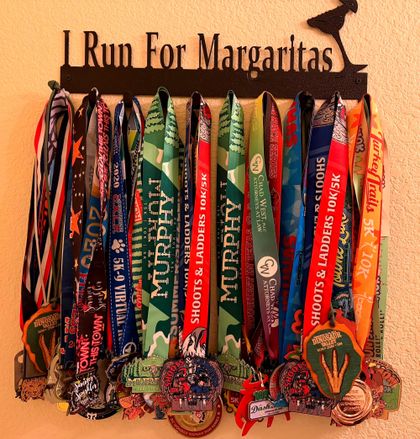
Nobody’s fitness routine is perfect, and Abbie and I are definitely no exception. This week, we sat down with no script and traded our deepest, darkest fitness confessions without sharing our lists ahead of time. It covers habits we know we should break, rules we quietly ignore, and a couple of stories we probably should have kept to ourselves. A few of Abbie’s confessions caught me off guard, and one of mine involves a rivalry with a total stranger.
First, in the Warm-Up, we cover new research on why an inconsistent wake-up time could be wrecking your sleep. We also look at one writer’s week-long attempt to hit 100 grams of protein a day, and what a dietitian said about it.
Got a fitness confession of your own? Leave it in the comments or email me at alex@practically.fit. Next week, Jen is back for a debate: what’s the best race distance?
Enjoying Practically Fit? Listen on Apple Podcasts, Spotify, Amazon Music, or YouTube, or wherever you get your podcasts. If you like what you hear, a rating or review on Apple Podcasts really helps. Get every episode and our weekly content straight to your inbox by subscribing below.
Read the Transcript
Guilty as Charged: Our Fitness Confessions
Alex: Welcome to Practically Fit, Real Fitness Over 40. I'm Alex.
Abbie: And I'm Abbie.
Alex: And today we're going to share some of our deepest, darkest fitness confessions.
Abbie: Ooh, saucy. That's right, Alex. Today we're talking about the things we're maybe not quite so proud of when it comes to fitness — the things we do in our routines that go against expert advice. We could even be talking about some of the things we don't want to admit to each other, for fear of the dreaded "I told you so."
Alex: That's right. So maybe I will touch on some of my competitive nature today.
Abbie: I don't know how you couldn't touch on that.
Alex: But before we get to our deep, dark fitness confessions, let's check out some of this week's wacky fitness news in the warm-up.
The Warm-Up: The Morning Mistake That's Wrecking Your Sleep
Alex: All right, first up on the warm-up, Abbie: an article from the Washington Post titled "The Mistake You're Making in the Morning That's Wrecking Your Sleep at Night." I want you to pay special attention to this.
Abbie: Oh, great. Alex has found an article, as usual, that makes his point for him.
Alex: Yeah. This article says, quote, "It turns out there's something you might be messing up in the morning that could be making it harder to doze off at night." Getting up at a different time each day — having an inconsistent wake-up time — could be setting you up for that frustrating bedtime experience. Abbie, this has to do with your circadian rhythms. According to the article, and here's something I didn't know, as soon as you wake up you start building something called sleep drive, which builds throughout the day. It's essentially the biological need to sleep. If you wake up at different times throughout the week, it throws off your sleep drive. The example the article gives is that if you stay up late one night and then sleep in late the next morning, compared to your normal schedule, you won't have built up enough sleep drive by your normal bedtime. Have you ever heard of the concept of sleep drive?
Abbie: I haven't, but interesting. What if you're really active during the day, so you make yourself really tired? Would that increase your sleep drive? I don't know.
Alex: I mean, we're active on Sundays, for example, and sometimes we have trouble sleeping. We'll talk more about that in a minute.
Abbie: I am personally going to try and prove this wrong.
Alex: Oh, that should go well. According to the article, there are some pretty good reasons to have a consistent sleep schedule, just as a reminder. It says, quote, "In a 2024 study of more than 72,000 middle-aged and older adults, the most irregular sleepers were more likely to have heart attacks, strokes, and other heart-related problems than people who kept more consistent sleep schedules, even if the irregular sleepers got more than seven hours of rest a night. And in a 2023 study, the most consistent sleepers, who went to sleep and woke up within a one-hour window most days, were less likely to die during the study period than the least consistent sleepers, who went to sleep and woke up within a three-hour window most days." So, Abbie — oh, wait a second.
Abbie: So in this 2023 study, there were people who died? That's very dramatic.
Alex: Yeah, basically this is saying that a consistent sleep schedule is a matter of life or death.
Abbie: Well, I've read and heard a lot about the negative impact of consistently undersleeping. For those of you who are a little bit older and grew up in the UK, you'll remember that Maggie Thatcher famously didn't sleep more than three or four hours a night. There's a lot of study and information around that. But I hadn't heard of this piece, both the number of hours and this scheduling aspect, so that's really enlightening. I wonder, in terms of the studies, whether the people were very irregular every night, versus the example you gave, Alex, of having a different sleep schedule once in a two-week period. There's a lot to reflect on with this.
Alex: Yeah. The article also talks about getting up at the normal time on weekdays when you're working and then sleeping in on weekends to catch up on sleep. I feel like that's something we do at least once every weekend, although I will say that sometimes watching Arsenal has me up even earlier than on a work day, which I know you really enjoy.
Abbie: I don't actually participate in that. I stay in bed.
Alex: Yeah. So I thought it was interesting that the article makes the point that catching up on sleep during the weekend can be to your detriment. It does suggest that if you're going to sleep in on the weekend, it can be okay if you only sleep in for an extra 30 to 60 minutes.
Abbie: Okay, we'd better tell our teenagers about that, then.
Alex: Yeah, there you go. So, lots of research there on sleep — a very interesting article from the Washington Post.
The Warm-Up: "Protein Bullies Be Gone"
Abbie: Very interesting. Thanks, Alex. Well, the second article we have is from the UK Independent. Alex is doing this deliberately — he's giving me the British articles to make me a stereotype.
Alex: No, I gave you this article because you sent it to me.
Abbie: I know, I'm joking. But I am going to start finding articles based in Australia or South America or something, so I can break away from my stereotype. Anyway, this article in the Independent was about protein.
Alex: What was the title of the article?
Abbie: The title, which I actually really liked, and which made me click on it — very cleverly — was "Protein Bullies Be Gone," and then the subtitle was "What Really Happened to My Body When I Tried to Hit My 100 Gram Protein Target for a Week."
Alex: Yeah, and I will say this is better than a lot of those articles you see now, like "What happened when I did push-ups for 30 days in a row." This is a legitimate thing she was doing.
Abbie: Yeah, definitely. At first I thought, oh, is this going to be one of those articles that tells you nothing? But it was actually very well written. It was a personal story by an individual called Charlotte Cripps, who was advised to start eating 100 grams of protein a day after she started building a strength training routine. We actually talked about that a couple of episodes ago, on episode seven of the podcast, so if you're interested in learning more about protein and the current protein craze, feel free to scroll back a few episodes and listen to that one. Anyway, Charlotte's personal trainer advised her to eat 1.8 to 2 grams of protein per kilogram of body weight. Her body weight was 50 kilograms — and Alex, don't say anything about kilograms versus pounds. It's an article in the UK, they use kilos.
Alex: I wasn't going to.
Abbie: Oh, you just looked primed to say something. So she weighed 50 kilograms at the time, and she was aiming for this 100 grams of protein per day.
Alex: Right. The comment I was going to make was that I thought it was interesting that it was her personal trainer telling her to do this, and not a nutritionist. I think this person is a personal trainer to the stars, if I remember from the article.
Abbie: Yeah, a well-reputed personal trainer who said, this is what you should be aiming for as you seek to build muscle. Another interesting part of the article was that Charlotte's a vegan, and that was a real struggle for her in this challenge. She goes through a day-to-day diary of how she managed it across the days, recording where she went to get her protein. She hit the 100 grams several times across the period, but she fell short on others, including one day where she only managed 34 grams. Because she's a vegan, her options were a lot more limited. She said she ate a lot of Fage Greek yogurt, cottage cheese, and eggs. And as she went day to day through the article, a bit like she was writing in her diary, she described falling into what she called her "protein hell." Towards the end of the article, she got advice from an expert dietitian rather than the personal trainer, who said she could probably be closer to 70 grams spread throughout the day, and that it was important for it to be manageable. If the hundred grams was making her miserable, making her hate the things she was leaning on to get there, that was just not going to work.
Alex: Yeah, it's a lot of eggs. I think, to some extent, from the article, she was trying to avoid carbs, and she didn't use anything like beans, even though she could have. I made an omelet the other night, a big omelet for dinner, with four eggs in it, and about two-thirds of the way through I was like, I can't eat any more of this. I like eggs, but at some point you just can't eat any more egg.
Abbie: Yeah, she really shared that in the article — that she started to hate yogurt and eggs. And the dietitian, Dr. Linia Patel, said something I thought was very helpful: "Protein is essential, but more isn't always better. Beyond about two grams per kilogram of your body weight per day, there's limited evidence of added benefit for most people. And an excessive focus on protein can crowd out other key nutrients, especially fiber, which plays a vital role in gut health." The author, Charlotte, really focused on that, because she said the diet left her feeling tired and bloated. She was crowding out other food groups, trying to eat as much protein as she could from limited sources like eggs and yogurt. I thought that was really interesting because it's something I reacted to when I look at these guidelines — I think I got a result like "I should be eating 140 grams of protein a day," which is a lot of protein, especially if you're also trying to reduce your calorie intake. It can feel like you're just eating a lot of the same things.
Alex: Also, with what she was doing, the Greek yogurt and the cottage cheese — that's a lot of dairy for anyone. I'm not surprised. If I ate all that — you want to talk about bloating. I can't do dairy, but I wonder how much that contributed to the bloating as well.
Abbie: Yeah, definitely. And the last thing, which is a good takeaway and a link to your first article, Alex, is that higher protein intake can interfere with your sleep and affect your ability to stay asleep.
Alex: Yeah, I thought that was cool. And we know from the first article how important sleep is — it's literally life or death, Abbie. We need to be consistent with our sleep time. But I hadn't heard that a higher protein intake can affect your sleep, so I thought that was really fascinating, especially for folks who are in on the protein craze these days.
Abbie: Yeah, exactly. I thought it was a very pragmatic and interesting article, and it resonated a lot with me because it comes back to: yes, make sure you're focusing on it, but maybe don't be obsessive. One of the things the article rounded off with was that if you're getting around 25 to 30 grams of protein in each of your main meals — breakfast, lunch, and dinner — you're doing a great job.
Confession Time
Abbie: Okay, Alex, now it's confession time. This is going to be a fun segment, because we're not getting scientific or sharing studies this episode. We've each made a list of our deepest, darkest fitness confessions, and we haven't told each other what's on our list. So we're going to be reacting in real time, and we'll see how much crossover there is between our lists and how much shock there is for each other.
Alex: Yeah, Abbie's very worried that we're going to say the same things in this segment, having not shared them with each other, so we'll find out about that. And I thought this would be really fun, because the last episode of the podcast, two weeks ago, was a really serious interview with Matt Fitzgerald. So we thought it was time to have some fun this week on the show. Abbie, we've each got five fitness confessions, and we're going to alternate. Are you brave enough to go first?
Abbie: Of course.
Alex: So, what's your first fitness confession?
Confession 1: No Warm-Up, and Skipping Leg Day
Abbie: I do not warm up or stretch before my runs.
Alex: That's a good one.
Abbie: Or after. I do sometimes, but I don't do it consistently, and I certainly don't do it every time I run.
Alex: Yeah, you do that leg-swinging thing sometimes that Runna tells you to do.
Abbie: Well, after I ended up with some tightness in my hips during marathon training, I did start to warm up more routinely, but I get a bit lazy, and then I get back to shorter runs and think, oh, I don't need to warm up, I can just go. I've been bad about that lately too.
Alex: Same. I've been running shorter distances more frequently, and sometimes I'll literally just walk out the door and start running. Even on fast runs I do that, which I know is not good. It's so bad.
Abbie: And it's completely daft, too, because it literally takes three to five minutes to do a quick warm-up. That's the daft thing — it's like, I don't have three to five minutes to quickly warm up and cool down. And I know I feel better when I do it. So that's one of mine. I'm my own worst enemy when it comes to warming up, cooling down, and stretching.
Alex: Sometimes I just want to get to the workout, especially when I'm doing something intense, like intervals. I don't want to run slowly for a mile before I ramp up my energy.
Abbie: See, I do do that. I do follow my run structure. But even before you do your slow warm-up mile, you should do a few movements to get your joints ready, especially if you've been sat on your arse all day working.
Alex: That's true, yeah. Okay, so confession one in the books.
Abbie: Okay, over to you, Alex. What's your confession number one?
Alex: I was going to say that was an interesting one, because we both confessed to it. So I'll start with one that harkens back to an episode we did several episodes ago — we touched on it, but I don't think we fully did. I'm going to confess this deep, dark secret: lately I have been skipping leg day.
Abbie: Well, lately you've been obsessed with calisthenics.
Alex: Right, but I haven't really been doing hardly any leg workouts, and the way I'm justifying it is, well, I'm running a lot, and I run fast.
Abbie: Oh, that's not true. That's not true.
Alex: I run fast, it's explosive running, so that's working out my legs.
Abbie: That's not the same as doing squats or lunges. Listen to the experts, Alex — listen to the experts, babes. They tell you that you still need to do all of those leg movements, even if you're running.
Alex: I know. Maybe if I did them more than once a week it would be better, because when I do it once a week, it just makes my legs tired. That's what I battle: I want to go do this fast run, and my legs are tired.
Abbie: I think that's some of the problem. I've been traveling the last couple of weeks, so I've struggled to fit weight workouts around my run schedule as I train for a half marathon. It's part of that management: I need to put it in the week in a place that won't affect my speed workout or my long run. You have limited windows, and if you miss them, you're down to once a weekend. I agree with you — you feel it a lot more, you get that real DOMS.
Alex: Yeah. The other thing I saw recently were some folks on the Calisthenics subreddit saying, "Well, I kind of skip leg day, but I do a lot of hill runs." They felt like hill running filled the leg void. Do you buy that one?
Abbie: I think it could contribute a little bit, but everything I've read says you're stressing your legs in a totally different way when you run than when you do strength training or progressive reps, even just using body weight, like squats and lunges. Those movements also open up your hips and joints in a different way than running does, because when you run, you're putting all of your impact load through one leg. So it's different.
Alex: Yeah, that's true. Well, good news, babe: I bought an ebook this week on pistol squats — one-leg squat progressions — so I can add that to my repertoire.
Abbie: I thought he was going to say he'd bought something on Amazon.
Alex: No, no. Like with one-arm push-ups, I can do more pistol squats now. So that's my plan.
Abbie: New obsession. Love it.
Confession 2: Re-Wearing Workout Clothes, and Needing a Firm Bed
Alex: All right, your turn.
Abbie: Okay, well, this one I don't think you'd be able to match completely, so it should be somewhat unique to me: sometimes I re-wear my bras, socks, or running shorts, and sometimes more than once.
Alex: I re-wear running shorts now, but only because you get mad at me for creating a lot of laundry with—
Abbie: Well, it creates an unbelievable amount of laundry.
Alex: Yeah. I mean, this isn't a surprise to me. I'm aware of this. I've observed it.
Abbie: I didn't say you wouldn't be aware of it, but the world isn't aware of it. I used to be very religious about only wearing something once and then putting it in the wash. But especially when you're training for a half marathon — that's four runs a week plus a couple of strength sessions, plus walking, plus yoga — I'm like, I don't want to wash that many clothes.
Alex: Yeah. How many running shorts and undergarments do you need to purchase?
Abbie: Oh, that was a sly dig, people. Sly dig. I think that's a good one.
Alex: Okay, I'll give you my next one. This one I think you'll find interesting. Contrary to before I met you, I've now shifted something very important in my life: I have to have a firm bed or I cannot sleep. And this is actually where I—
Abbie: Oh, yippee!
Alex: This is where I got the idea for this episode. We traveled last week to a college visit for one of the kids, and we got a very soft bed, which I used to sleep on and swear by before I met Abbie. It also had the added element of a rickety frame, where anytime either one of us moved, it made a lot of noise and transmitted the energy, and it kept you awake. But for two to three days after just sleeping in that bed for one night, my entire body felt wrecked. You don't realize how important the mattress is as you age. So my confession is that I need a firm bed, and that's a 180 from five years ago.
Abbie: Yeah, I love that, although I'm not sure it's a confession. I think it's more of a requirement, right?
Alex: Right, but it's a confession in the sense that I've changed my opinion based on input from you.
Abbie: And also how much better your body feels now that you're not sleeping on a squishy, squashy bed.
Alex: Yeah, exactly.
Confession 3: Eating Back the Calories, and Pushing Through Injury
Abbie: Okay, next up for me — this is my third. I have been known to burn, say, 300 calories on a grueling run, or maybe a thousand calories on a very long bike ride, and then immediately smash at least triple that in a meal.
Alex: Yeah, or snacks, right?
Abbie: Yeah, and I use the "I did cardio, so I'm okay" card.
Alex: Time to have some chips. Ice—
Abbie: Cream.
Alex: Oh, ice cream.
Abbie: Not very often. I don't really like ice cream. But yeah, definitely chips, chocolate, a big burger. And before you know it, you've eaten three times what you burned off.
Alex: Right. That's a good one, and I think a lot of people are guilty of it. We've talked about this in the past, and we thought you're more prone to this if you do cycling.
Abbie: I am really prone to this with cycling. I definitely used to get so hungry.
Alex: We haven't done that for years now, really, but when we first met — yeah, with cycling you think, oh my gosh, I rode 40 miles, I can eat whatever I want. But really you didn't burn as many calories as you think, especially compared to running.
Abbie: And you probably took some fuel while you were on the bike anyway, so you're net-net not that far off. That was definitely the case for me.
Alex: Yeah, and I do that with running too.
Abbie: I mean, cardio does make you hungry.
Alex: Right. Ultra-processed foods. Over to you. Okay, this one will surprise you, that I'm admitting to it, because it's something you talk about all the time: I will sometimes push myself to injury via exercise because of my drive to improve or do more reps. In my brain, if I did 10 reps last time, I need to do 11 or 12 this time. Or if I'm doing a new calisthenics movement, I need to upgrade it and move on to the next one. I have been known to push myself to injury just competing with myself.
Abbie: I had that one on my list too.
Alex: Uh-oh. Okay, so we could just talk about it here.
Abbie: Mine is more often with running. I'm more cautious with weightlifting for two reasons. One, I'm newer to it, so I don't have quite the same comfort level, and I think I've been more cautious. And number two, with my neck injury, I'm super conscious of it now.
Alex: Yeah, that was a game-changer for you, having the neck surgery.
Abbie: But with running, I can run through it. "Oh, my knee hurts. I'll just carry on and see if it still hurts in another two miles. Oh, it hurts a little less now." Or "I'll still go run tomorrow, because I have an easy run on the plan, and it's only an easy run."
Alex: Yeah. And the one I was thinking of recently was the one-arm push-up thing.
Abbie: Oh my god.
Alex: Yeah, I've been doing one-arm push-ups. I used to do them when I was younger, and I thought, oh, it'd be fun to get back to that. But it puts a lot of pressure on your shoulder joint, and my shoulder and my pectoral muscle have been pretty sore lately.
Abbie: But he carried on doing the one-arm push-ups.
Alex: I will say I've stopped for a week now, this week. I haven't done any, to try and get this to heal, but it's just dumb, right? In my mind, I was making progress on those, and it's awesome, because if I can do one-arm push-ups, I can do so many more regular push-ups. It makes you stronger.
Abbie: And why don't you just do the regular push-ups, babes, rather than repeatedly hurting the place that is sore and injured?
Alex: Yeah. The other one, many years ago: I kept doing box jumps but kept adding height to the box. This was before you knew me, in my 30s, and I finally pulled my entire groin, just adding more height to the box jumps. Not the smartest thing. It's just my competitive nature, which is the theme for the remainder of my confessions here. So, over to you.
Confession 4: Signing Up Without Reading the Fine Print, and Strava Rivalries
Abbie: Competitive nature, and in my case, a little bit of stubbornness. I have two more, so I'm not going to count that one, because that was your one. My number four is that I have been known to sign up for races and/or events without even looking at the real details, with hopeless optimism about how I'm going to get there. Sometimes I then realize it's something a little different from what I thought, or I just didn't know the details, and I have to figure out how I'm going to train for it. The biggest example was several years ago, before I knew Alex, when some friends from the run club asked if I wanted to do Ragnar.
Alex: Oh yeah.
Abbie: I said, "Yep, sounds great." So I signed up and joined the team, and afterwards I realized it was a relay race where we had to do multiple different legs. It was also on trails, and I hadn't been trail running, so I had to prepare for both of those things in not a crazy short period of time, but say two and a half, three months. So yeah, I'm guilty of signing up for races or events without looking at the details, and then figuring out afterwards how I'm going to train for it or complete it.
Alex: Like the other day, when you were just randomly like, "Oh, we're going to Berlin for the—"
Abbie: Oh, I had told you about that. But that's not this. That's a half marathon.
Alex: Okay.
Abbie: That's in April.
Alex: Okay. Well, I wasn't aware.
Abbie: Yeah, I had told you about that. I said I was applying for Berlin and Portugal — they're two amazing half marathons — and I got into Berlin, which I'm very excited to do.
Alex: You didn't get into Portugal?
Abbie: No, I was really gutted about that, because you start on this amazing bridge, and it's supposed to be beautiful.
Alex: Yeah, I would have rather gone to Portugal.
Abbie: Me too, but it was really competitive.
Alex: Okay, so my next one, number four, kind of talks about my competitive nature. Beyond competing with myself, I'm also motivated by meaningless competition. I've been known to do stupid stuff on Strava just for fun. Local Legend is one that we have a pretty good story around, if you recall.
Abbie: Well, there are two pretty good stories around that. There was when we were first dating, when we kept stealing the Local Legend off one another.
Alex: Which is completely meaningless, by the way. It just means you've ridden or run the segment the most times of anyone in a certain period of months.
Abbie: But we would also not tell each other where we were going on our route, to steal the Local Legend.
Alex: Yeah, that was pretty psychotic. And then there was the other one, where I stole somebody's Local Legend and they stole it back, and I thought, okay, I'm going to steal it again. So I rode around this specific hill like ten times, and then this person went back out the same night and rode around the hill at night numerous times, and I was like, yeah, that's when I thought, back away, Alex.
Abbie: This person seems a little psychotic.
Alex: Yeah, they're going to be waiting for me by the hill and find out who I am. So stuff like that has motivated me, or even Strava PRs, back when I was cycling a lot.
Abbie: Excuse me, this summer in Mexico, you wanted that little segment at the bottom of the hill, and you figured out you'd gone around the wrong way, so you had to do it the other way around.
Alex: I think I was second on that. Yeah, it was pretty good. But where I used to live, I'd gotten the KOM on a few climbing segments on hills — I would pick out hills where it looked like I might be able to win it, and then get really annoyed when people would take it away from me. So I've still got a few of those out there, believe it or not.
Abbie: Yeah, of course. I know, so have I, which is random.
Alex: So that's embarrassing. I admitted that on the podcast.
Abbie: Well done, babes.
Confession 5: The Forgotten Sports Bra, and Being Hard on Myself
Abbie: Okay, so my last one is more of a funny one. This was quite a few years ago. I used to go to a gym after work that wasn't on my route home, so it was a little out of my way, and it wasn't easy to divert home. I was going to a spin class and I forgot my sports bra. So I had to wear my regular bra, because I thought, I'm already here, the class is about to start, I'll just work out in my regular lacy bra, which was not much fun and didn't really go with the rest of my gym kit. It was a bit of an epic fail.
Alex: What was the outcome?
Abbie: It was just not as supportive or comfortable — they're very different bras, right?
Alex: Did anyone notice?
Abbie: I'm sure people did, because a sports bra generally has a racerback and normal bras have normal bra straps, and I would have been wearing a racerback tank top. But you know what? Spin class ruled.
Alex: Well, there you go. I have an embarrassing gym story as well that relates to undergarments, but I don't know that I'm going to share it here.
Abbie: Okay, well, now everybody's just wondering what that is.
Alex: Okay, fine. It was 24 Hour Fitness many years ago. I had forgotten an extra pair of underwear, and I left mine out to breathe while I went to the shower, because I had to go to work afterwards. I came out and they were gone. Someone had taken them, and I had to call my boss and say, "Uh, I'm going to be a few minutes late to work." He asked what happened, and I said, "Uh, it's kind of weird." He thought it was funny.
Abbie: That's hilarious.
Alex: Yeah. Well, my last one is more serious. It's not funny. It's that I can be very hard on myself when I train for something. If I'm training really hard for a race, for example, I want to PR the race or do really well, and I can be hard on myself when I don't beat the PR or meet my goal, which is not the healthiest thing to do, but I do it anyway. This is something you get on to me a lot for, and I always say, "Oh, whatever, whatever." So here I am admitting it to the podcast world: I can be a little bit hard on myself sometimes with this competitive nature I have.
Abbie: And I think it is really hard, because even if you say, "Oh, I'm going into this race and I'm going to take it a little easy," when you're in a race, your competitive side does kick in. I've definitely been there. Or you're comparing yourself to your former self, which is something I learned in a very humbling way this year, getting back into half marathons. I did a half marathon on a route I'd done before, and I was a full 25 minutes slower because I was coming back from injury. So sometimes you have to celebrate the win in the moment for itself, rather than comparing yourself.
Adjusting Goals and Acting Our Age
Alex: Yeah, and that's what I really liked about the concept from the last podcast with Matt Fitzgerald, about adjusting your goals mid-race. That's a really good concept, and it's what I was thinking here as well. So you're hard on yourself, but maybe sometimes you do have to adjust mid-race or mid-competition and accept that you're not going to meet your goal, because it's the healthier thing to do.
Abbie: And one of the things I really like from marathon training is that you generally think about an A, B, and C goal. Maybe your A goal is your PR, but then you have a B goal that's a step down from that, and a C goal that's a step down from that. That framing works really well for my head, because depending on the conditions and what's happening on the day — and a bunch of stuff you just can't control — you might have done the best training you could ever do, and then the weather throws something at you, or you feel something during the race and have to pull back. So I like having that framing of adjusting your goal midway, and I think it's a win when you stay in it. If you always went out and got your goal first time, it would be easy. That's not what this is, right? I think it's nice to reflect that it's a win if you're able to adjust and stay committed. Many of these things are as mental as they are physical.
Alex: Yeah, and I think we were talking about this the other day — especially as we're aging, we have to reassess how we set goals and think about acting our age. That may be something we cover in a future edition of the podcast. So there you have it, our fitness confessions. Abbie, was there anything that surprised you?
Abbie: No.
Alex: Nothing? They were all expected? You weren't surprised that I actually admitted to these things?
Abbie: Well, no, actually. I think you know these things. You just sometimes don't want them pointed out to you, right? And I'm the same.
Alex: I just think everyone likes to put on airs that they're perfect, that they're doing everything the right way when it comes to fitness. And we're all fallible. We all make mistakes.
Abbie: And sometimes we underestimate something and come out way better than we thought, and sometimes we fall short of our own expectations, or we get stuck in these loops, and we know we shouldn't do it, like not warming up — "I haven't got time" — and you're like, really? Yes, you do. You're just in that loop. So, very pragmatic and fair, I think, in terms of the things you shared.
Alex: Yeah, you as well. Fun to admit to these on the podcast.
Abbie: Definitely.
Wrap-Up
Abbie: Well, that's it for today's episode of the podcast. We hope you enjoyed our confessions and our stories. If you've got a fitness confession you'd like to share, we'd love to hear about it, so please feel free to comment on this episode over at practically.fit, or shoot us an email at alex@practically.fit.
Alex: Yeah, and we also hope you enjoyed our last episode, the interview with Matt Fitzgerald. He's really prominent in the running and triathlon world, so if you haven't checked that out, go listen to episode 12 of season two. Jen and I were really excited to conduct that interview and read his book, and we'll do more of those in the future. On next week's episode, Jen will be back, and all three of us will be debating the question: what's the best race distance for running?
Abbie: Oh, so fun. I cannot wait for that. Until then, remember, as we've talked about in our confessions today: when it comes to fitness, you do not have to be perfect, you just have to be practical. We'll catch you on the next one.