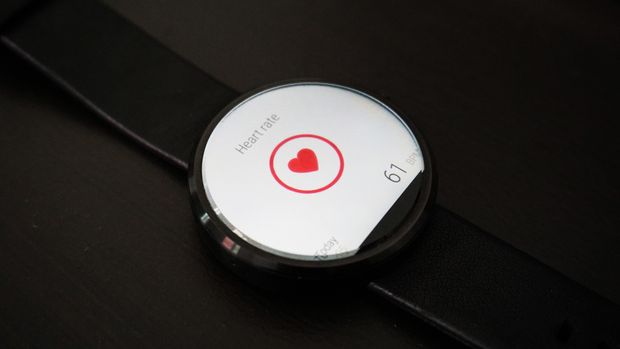
The proportion of Americans under 40 having heart attacks went up 2% each year between 2000 and 2016. That’s a pretty sobering statistic, and it shows we should definitely be paying more attention to our heart health. So where to start? How about monitoring your heart rate! In this episode, Jen and I examine the research on heart rates. What does your resting heart rate tell you about your overall health? What’s your max heart rate, and how do you calculate it? And why are heart rate zones so confusing? We search for answers to those questions, and share some simple tips on monitoring heart rate based on our own experience.
Enjoying Practically Fit? Listen on Apple Podcasts, Spotify, Amazon Music, or YouTube, or wherever you get your podcasts. If you like what you hear, a rating or review on Apple Podcasts really helps. Get every episode and our weekly content straight to your inbox by subscribing at practically.fit. Have a story or comment to share? Email us at alex@practically.fit.
Read The Transcript
What's Your Heart Rate Telling You About Your Health?
Alex: Welcome to Practically Fit, Real Fitness Over 40. I'm Alex Johnson.
Jen: And I'm Jen Chamberlain.
Alex: And today we're going to talk about your heart rate. Should you monitor it? What are heart rate zones? And what does your heart rate say about your overall fitness?
Jen: Can I admit something here, Alex?
Alex: Absolutely.
Jen: I know next to nothing about this topic, at least before we started researching it for the podcast. But it seems like a pretty important subject. I've always thought it's something I should know more about, so I'm glad we're doing this. And coincidentally, I recently read an article in the San Francisco Chronicle that said the proportion of Americans under 40 having heart attacks went up 2% each year between 2000 and 2016. That's a pretty sobering statistic, especially for those of us who are well over 40. So why should we care about our heart rate?
Why Heart Rate Matters
Alex: Well, I think you said it right there. We know the impact of heart disease in the United States — it's the number one killer of all causes of death. For me, this is personal as well. I have high blood pressure, my dad had a stroke in his mid-60s, and I've seen heart disease in my family. So I think heart rate is a really great thing to monitor. The first place to start, when you think about heart rate and your overall health and heart health, is resting heart rate. That's a really important indicator of overall health, and it's pretty easily tracked these days with smart wearables. I personally track my heart rate with a Garmin watch. Of course, these wearables aren't perfect, but they give you a good trend of data over time. I know you track yours as well. So what's your resting heart rate, Jen?
Jen: I do. I have an old-fashioned Fitbit that I track my heart rate with, and like you said, over time you get a pretty good read on what your average is. I average between 51 and 53 beats a minute for my resting heart rate. If I'm really calm, like first thing in the morning, I can get down into the 40s, like 45 to 48. So that's my range.
Resting Heart Rate: What's Normal?
Alex: Wow, that's pretty low. That may come up at your doctor's office, right? We'll talk about that in a little bit. Of course, it can also be an indicator of fitness. Mine's about 60 on average — day to day, anywhere from the upper 50s to the low 60s over the course of a week — so I feel pretty good about those numbers. Let's talk more about resting heart rate and what it means. I found some great basic information from Harvard Health Publishing: the average resting heart rate of a healthy adult is anywhere between 60 and 100 beats per minute. That's why I was referencing yours being a little lower. It's not bad, but it's something that could be a concern if you had a condition, which you don't. A resting heart rate at the low end of the spectrum may offer some protection against heart attacks, and we'll talk more about that and some interesting research we found in a bit. Research has found that those with the highest resting heart rates, more than 76 beats per minute, were 26% more likely to have a heart attack or die from one than those with the lowest resting heart rates, 62 beats per minute or less. So if your heart rate is consistently above 80 beats per minute, even though that could be considered the healthy zone, you should probably talk to your doctor. There are all sorts of factors that can influence resting heart rate: age, fitness level, how much caffeine you drink — are you pounding coffees all day? — whether you smoke, how much alcohol you drink, medications you take, stress, anxiety, you name it.
Jen: Yeah, absolutely. I do pound coffee pretty much all day until about three o'clock, and that doesn't seem to affect mine too much, but maybe I'm just used to it. I will say alcohol does. Alcohol causes your heart rate variability to drop and your resting heart rate to rise, and both of those are negatives. Heart rate variability is the variation in the amount of time between the beats of your heart, and it's supposed to be a little higher rather than a little lower. It's measured in milliseconds, so it's a pretty delicate indicator. Like many people, I tend to drink more on weekends than during the week, and I've seen my heart rate variability drop just a little bit, and my resting heart rate go up just a little bit. It just shows how much even a small thing like that can have an impact.
Alex: Yeah, I've noticed that as well. Like I think I mentioned before, if I have a couple of drinks in the evening and then go to sleep, my resting heart rate is a little higher overnight. So that can definitely have an impact.
The Swedish Study: Why Changes Matter
Alex: If you're tracking your resting heart rate, which we're arguing you should — there are great tools to do this today, and it's an important indicator of health — one thing to watch for is a change. You can see how your heart rate averages out over time with these fitness wearables, so if you have a sudden change, it could indicate a health issue. Again, that's why I think there's a real benefit to tracking it. I found a really interesting study from Sweden, published in 2019, called "Impact of Changes in Heart Rate with Age on All-Cause Death and Cardiovascular Events in 50-Year-Old Men from the General Population." That one stuck out to me. I'm not quite 50 yet, but it's right down my alley.
Jen: Cool.
Alex: The study tracked a random sample of men born in 1943 who were living in Gothenburg, Sweden, over a 21-year period. Sweden's a pretty chilled place, I've got to think, so a good place to track people's heart rates. This group of men was examined three times for their heart rates via EKG and testing: in 1993, when they were 50; in 2003, when they were 60; and then in 2014. The study found that participants with a baseline resting heart rate greater than 75 beats per minute in 1993, when they were 50, had about a twofold higher risk of all-cause death, cardiovascular disease, and coronary heart disease, compared with those whose resting heart rate was less than 55 beats per minute in 1993. Then they examined these men when they were 60. Participants with a stable resting heart rate between 1993 and 2003 had a 44% decreased risk of cardiovascular disease compared with participants with an increasing resting heart rate over that time period. Furthermore — and this is pretty wild — every beat-per-minute increase in heart rate from 1993 on was associated with a 3% higher risk for all-cause death, a 1% higher risk for cardiovascular disease, and a 2% higher risk for coronary heart disease. So every beat per minute you added in that time period increased your risk of death. Overall, the study found that individuals with an increase in resting heart rate between 50 and 60 years of age had worse health outcomes. Fascinating research. My big takeaway is that we've got to keep moving and exercising our hearts to keep the resting heart rate down and keep the ticker healthy. It's amazing what a big impact this can have on your cardiovascular health.
Jen: Yeah, absolutely. And the other thing it makes me think about is a comparison with weight gain. I actually love the way this study is structured over ten-year periods, because I've seen other studies showing that all of us tend to gain weight very gradually over time, and that weight gain correlates with worse health outcomes. It happens gradually, and it seems like with heart health it's the same thing. You have to be careful that these things don't creep up on you, and this study is a perfect indication of that. So that's my big takeaway too.
Alex: Yeah, and having the three different check-ins, the way they structured it, I thought was really amazing. This is really solid research.
The Big Study: 92,457 Adults
Alex: Speaking of weight, I think you've got more research that has that as a factor compared to resting heart rate, right?
Jen: Yeah, absolutely. I think it's really fascinating how much resting heart rate can vary from person to person. Even you and I are both relatively fit, and our heart rates are quite different. So we found this other study, and it had a long title, so bear with me. It was called "Inter- and Intra-Individual Variability in Daily Resting Heart Rate and Its Associations with Age, Sex, Sleep, BMI, and Time of Year: Retrospective, Longitudinal Cohort Study." Let me try that whole thing over again.
Alex: That's a tongue twister. You want me to try it? "Retrospective, Longitudinal Cohort Study."
Jen: There you go — of 92,457 adults. That's a big sample, I must say.
Alex: Yeah, huge.
Jen: This study did a large-scale analysis of heart rate data over a period of 35 weeks for this cohort, measured by a wrist-based tracker, kind of like my Fitbit and your Garmin. There were several interesting facts, and I'll highlight a few. First, individuals can have a daily resting heart rate that's normal for them but differs from another individual's normal by as much as 70 beats a minute, which is more than I would expect, actually.
Alex: Yeah, that's a huge difference.
Jen: Absolutely. Ninety-five percent of the men in the study had a resting heart rate between 50 and 80 beats per minute, while the corresponding range for women was between 53 and 82 beats per minute. Women had a significantly higher resting heart rate across all ages, which is interesting to me personally, because mine is really low. Across all ages, the average resting heart rate increased until approximately 50 years of age and then began a downward trend. And resting heart rate and BMI — this is a really interesting point — appeared to have a U-shaped relationship, with the lowest resting heart rate associated with a BMI of 21 for women and 23 for men, generally in the middle of the healthy range for BMI.
Alex: And of course, that stands for body mass index.
Jen: Exactly, good point. So there's definitely a correlation between weight and your heart rate. Sleep also plays a big factor, and this came out in the study as well: the lowest resting heart rates, for both men and women, were registered by those who slept an average of seven to seven and a half hours per night. So really interesting.
Alex: Yeah, you always hear "get eight hours of sleep," but it seems like seven to seven and a half is pretty optimal for your health, based on this study. I tend to be in that range generally, so I found that exciting.
Jen: Yeah, me too. And, a bit of a side tangent, with the trackers you can measure your sleep really well. I've found that even if I'm in bed for eight hours, I'm actually getting about seven to seven and a half hours of real sleep versus wakefulness, as they call it. Here's another interesting point: people in the study who were underweight and overweight both showed greater heart rate variability, so on both sides of the spectrum. And last but not least, the time of year had an effect. Resting heart rate peaked in the first week of January for both men and women and hit a yearly minimum at the end of July. I wonder if climate is a factor in that, too — we'll talk about that later, because I've noticed heat really affects my exercising heart rate.
Alex: Right. You lived in Texas for a long time, so you're probably seeing a difference in San Francisco. That's really everything you wanted to know about resting heart rate, hopefully, and more. We covered a lot there, and the studies were really in-depth and fascinating, so we wanted to share a lot of facts from them.
Max Heart Rate
Alex: That's your resting heart rate, but what about your heart rate when you're working out? I think the most important number to know is your max heart rate, the highest number of beats per minute your heart can pump under high stress, like exercise. I think this is really interesting as well. I have a low resting heart rate, and so do you, but when I exercise, I can crank my heart rate up pretty quickly. If I put in a good effort, it'll go up pretty fast, especially with running compared to cycling. I can really control my heart rate more when I'm cycling. But in running, if I do a heavy effort, you can look at the chart over the course of the exercise, especially when it's hot, and you'll start to peak out toward max heart rate sometimes. You have to be really careful with that.
Jen: Totally. I'm so glad we're getting into this, because this is the part of heart rate monitoring that's always mystified me: what your max heart rate should be, and what these heart rate zones are that we're supposed to be in. I have to confess I haven't paid much attention to it, so maybe this will make me a believer.
Alex: Maybe so. You can estimate maximum heart rate using a formula. I remember when I was young, they always said it's 220 minus your age. It reminded me a bit of how you divide up your stock portfolio as you get closer to retirement. Now there's a more modern formula.
Jen: Oh, cool.
Alex: I might have to put this in the podcast description, because it gets into numerical operators: it's 208 minus 0.7 times your age. That formula should give you a pretty accurate estimate of your max heart rate, but again, it can be quite variable for people, and you can square it up with data from your fitness watch on a very heavy effort. For example, if I climb a long hill at an intense pace on my bike, I've seen my heart rate hit 190, 191, 192 at max effort. The formula tells me my max heart rate is about 186, so I know it's somewhere right in that range. I also occasionally do races on Zwift, the virtual cycling we've talked about in the past. You register for a website called ZwiftPower, where you can see everybody in the race and their data, and I see people hitting way over 200 on their max heart rate. So again, you've got this formula, but it may be very different for you.
Jen: You can actually see people's heart rate in that data at that time?
Alex: Yeah, in the races, people elect to share it. But I would argue you really want to be careful with that. If you are going significantly above this formula, I think it's something you'd want to talk to your doctor about, because it's supposed to be pretty accurate. We're not physicians, but going above your max heart rate, or spending a lot of time at max heart rate, can be dangerous. I've seen various estimates of what's safe, but basically you should only spend time in this zone in short bursts — me climbing a steep hill on my bike, doing a HIIT workout, or sprinting. Here's a quote I found from a Runner's World article called "Five Max Heart Rate Training Myths Busted" — great clickbait title. It says, quote, "Most people have one to two minutes max at their max heart rate. Highly trained athletes may have more." That's Sherry Minor, a sports medicine physician and age-group Ironman athlete at Andrews Sports Medicine and Orthopaedic Center, which I believe is in Alabama, where all the athletes go for their sports injuries. She goes on, quote, "Expect to see your performance suffer very quickly if you try to maintain your max heart rate for more than just a short burst." So you want to be really careful about spending time in the zone of your max heart rate. That's why I think it's the most important heart rate number you can know for exercise.
Heart Rate Zones
Jen: Absolutely. I'm going to start following this more closely — I am a believer now. The other thing, in addition to max heart rate, that I've heard a lot about throughout my whole fitness life is heart rate zones. Sometimes you'd go to the gym and they'd be posted on the wall, like a red, yellow, or green type of thing. I've never taken the time to learn much about it, but I've always been curious, so for this episode I dug into it a little more. Your apps and smart devices will now calculate them for you, which is great, because that's probably why I didn't pay more attention: it required a little bit of math, which is not my strong suit.
Alex: Yeah, neither of us — we're creative, we're more writers.
Jen: English major here. Anyway, now these apps will track them for you. I've noticed that my fitness app tells me when I'm in these different zones. According to Runner's World, people most widely use the heart rate ranges developed by the heart rate monitor company Polar, which I remember — I had one of those Polar straps around my chest way back when. This was based on their research in the 1970s, and they identified the zones as follows. Zone one is very light, 50 to 60 percent of your max heart rate. Zone two is light, 60 to 70 percent. Zone three is moderate, 70 to 80 percent. Zone four is hard, 80 to 90 percent. And zone five is very hard, 90 to 100 percent of max heart rate, so that's when you're hitting your max heart rate or maybe even above.
Alex: Yeah. And I think these are really useful if you're doing specific training, like long running or a race, to get a general sense of what you're doing. And again, with max heart rate, you don't want to be working out all the time in the hard or very hard categories. If you're hitting that percentage of your max heart rate in all your training, that's not healthy.
Jen: I have to confess something here, actually. This goes to my perfectionist tendencies. My watch tracks this all the time, and it buzzes me when I transition between these different zones. Mine's very simple — it just does three: a fat-burn zone, which is the lower-end cardio, and then what they call peak, which is closer to my max heart rate. If it drops below peak, I always feel like, oh, I should be working harder. But actually that's probably where I want to be. If I'm doing a cardio workout, I should be in the cardio zone, not maxing out the whole time.
Alex: Three seems like not enough zones. But then, every product I have — I have my Garmin watch, and a Wahoo bike computer, and Strava has heart rates too — they all have different zones. It's very confusing.
Jen: It's confusing.
Alex: That's why I think it's a general guide. I wouldn't try to peg all my training like "today I'm zone two only." Number one, it would be really hard. But you definitely don't want to be in the upper zones all the time, and you want to moderate and mix up your workouts. So I think it's a good general guide.
Our Key Takeaways
Jen: Yeah. So what are your key takeaways from all of this information we've looked at?
Alex: I've got three. First, very basic: use a wearable device for estimated heart rate data. Track your resting heart rate, and track your heart rate during exercise. I actually did not used to do this.
Jen: Me either.
Alex: And the reason I didn't is that I know my heart rate tends to go pretty high when I exercise, especially when I was training for half marathons and trying to hit certain targets, like doing it in under two hours. I knew I was getting up into that high max zone sometimes, and in my mind I thought, I don't want to know. Which is a horrible attitude. I literally had the thought, well, if I drop dead... and then, no, that's a terrible attitude. So if you have health anxiety, this might be the type of thing where you're worried about tracking your heart rate or wearing one of these watches because you think you'll fixate on it all the time. But it was actually quite reassuring to me, because once I started tracking, I thought, oh, I have a really good resting heart rate. I don't see any downside. It had the opposite effect of what I thought it would — it showed me I'm very healthy in terms of heart rate. I think it's really important. It can shine a light on how hard you're working, and whether you're working too hard in your workouts. And again, if you have a change in your resting heart rate, it would be good to consult a doctor, because something could be wrong with your health. Second tip: watch the max heart rate. If you're spending too long at the top of your range, it's dangerous. It's not good for your training routine or your recovery, you could end up overtraining, and you could end up with a serious health issue. And third, you don't have to religiously track your heart rate zones. We talked about the zones, but try to vary your workouts, like I was just saying: some of your workouts could be harder, some moderate, and you want to work in recovery-type workouts from time to time as well. The heart rate data gives you a good sense of this even while you're exercising. If I'm doing a recovery bike ride, I know I don't want to go over, for me, about 130 beats per minute, so I can look at my bike computer and say, I need to slow down, or I need to stop climbing this hill so fast. Those zones vary depending on your heart rate data, but I think they can be really beneficial in a general sense for tracking your workouts. How about you, Jen? What tips do you have?
Jen: For me, my first tip would be to watch your patterns. Like you, Alex, I don't religiously track my heart rate, but if my resting heart rate starts to creep up, or my max heart rate is higher than usual, I try to check in with myself and ask whether something's going on. This happened a couple of weeks ago — I actually blogged about it last week. I was in a period of really intense work stress, working really long days, and if I could, I'd squeeze in a run at the end of the evening. I found my max heart rate was higher than usual, and I was starting out at a baseline heart rate that was higher than usual for a workout. So I started wondering whether there was something going on, and I think I was already in that stress fight-or-flight mode before I even started working out. I tried to do some other things to manage my stress, because I realized it was starting to impact me physically as well. So anytime your patterns are changing, it's a good idea to at least check in with yourself, and maybe check in with your doctor to see if something might be going on.
Alex: Yeah, and stress can be one thing that causes your heart rate to go higher than normal during a workout, or shoot up. I remember when you had that. One thing I also saw was dehydration — if you're dehydrated, that can really impact your heart rate during a workout as well. But it's good to be watching this.
Jen: Absolutely. My second one: if you do feel something's off, don't ignore it. This doesn't have anything to do with monitoring, but the first time I had heart palpitations, I talked to my doctor about it. We talked about this a bit more in depth on a previous episode, and it ended up being nothing to worry about. But if you feel like something's just not quite right, talk to a health professional about it, just to make sure. And my third one is to be mindful of the temperature. Way back when I had one of those Polar straps, I was trying, for a brief period, to run very religiously in certain heart rate zones. I was living in Texas at the time, running in the middle of summer, when it was 80, 90, sometimes pushing a hundred degrees. I could not keep my heart rate in the zone — I was maxing out even at a pretty moderate pace — and I got completely frustrated, because I felt I should be able to maintain the same pace. Over time I realized that heat stress puts so much stress on your heart that you have to adjust your effort to compensate. At first I found it incredibly frustrating, but you have to take all these factors into account, really pay attention to your body, and not try to push it beyond your natural limits.
Alex: Yeah, I think for me too, that was one of the reasons I didn't want to track it for a long time. We're working out half the year in pretty strong heat here in Texas, and I thought, oh, I don't want to know, because I know it's high. But like you said, you definitely need to adjust your effort in that type of weather. Those are awesome tips, Jen. I think we've covered it all when it comes to heart rate. If listeners have thoughts, please feel free to leave comments over at practically.fit.
Wrap-Up
Jen: Yeah. For next week, we're going to talk about bodywork. This encompasses all kinds of things, from massage to cupping, cold laser, and ice therapy, which I used to use pretty heavily. We're going to dive into all of it — the science behind it, what's worth your time and what's not — and share some practical tips, as always.
Alex: Oh yeah, I'm excited about that. We're also working on lining up some more podcast interviews, so stay tuned for that. But until next week, until we talk about bodywork, remember you can go over to practically.fit and sign up for our newsletter. We have great weekly content that we can send directly to your inbox. And again, if you have comments on the podcast or stories you'd like to share, please feel free to comment over at practically.fit. Until next week, remember that fitness is for everybody.