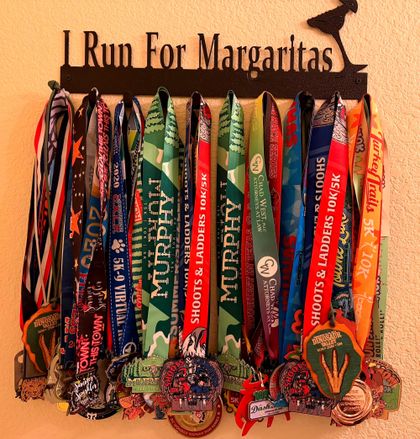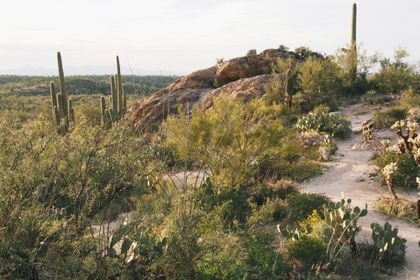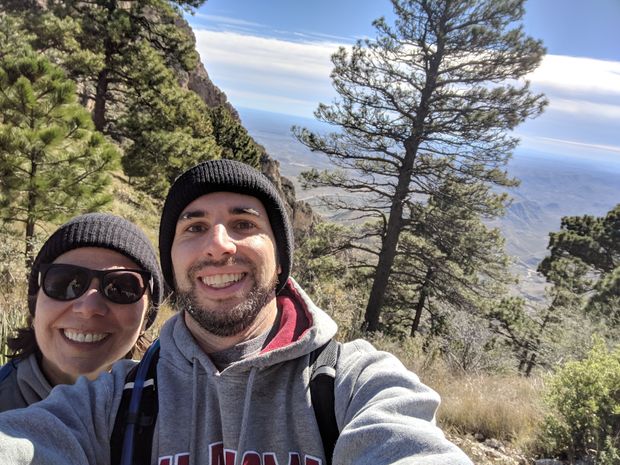
Can you hike your way to health? In this episode, Jen and I explore the physical, mental and social benefits of hiking. They also share stories about their favorite hikes (many with fitness friends), including a few funny hiking fails. First time hiker? Jen and I also provide helpful tips on hitting the trails.
Enjoying Practically Fit? Listen on Apple Podcasts, Spotify, Amazon Music, or YouTube, or wherever you get your podcasts. If you like what you hear, a rating or review on Apple Podcasts really helps. Get every episode and our weekly content straight to your inbox by subscribing below.
Read The Transcript
Is Hiking the Perfect Fitness Activity?
Alex: Welcome to Practically Fit, Real Fitness Over 40. I'm Alex Johnson.
Jen: And I'm Jen Chamberlain.
Alex: And today we're going to talk about how hiking can benefit your fitness and your mental health.
Jen: That's right. We thought this was a nice follow-up to our podcast last week on the benefits of exercise and mental health. So today we wanted to take it further and talk about how getting out into nature is a great way to mitigate stress and anxiety, and to exercise at the same time.
Alex: Yeah, it's a really great way to exercise, Jen. Did you know that hiking burns roughly twice as many calories as a standard walk?
Jen: No, I had no idea. That's cool. Not as much as running, but more than walking.
Alex: Yeah, and I presume that's because when you're, quote-unquote, hiking, you're getting out to maybe some more rugged areas, and it's not just a flat path. So yeah, it can definitely burn more calories. You also might have some gear with you. So I think there are a lot of good aspects to hiking from a fitness perspective, but also from the mental health perspective, and we touched on that last week.
The Science: Nature and Mental Health
Jen: Yeah, lots of benefits to hiking. But before we get into talking about our own experiences, let's talk about the science around this. When we were listening to Brandon talk last week about fitness and mental health, he talked about how helpful it can be just to get out and walk. But what about hiking specifically? There was a 2015 Stanford study that found that hiking in nature reduces the risk of depression. Specifically, the study, which was titled "Nature Experience Reduces Rumination and Subgenual Prefrontal Cortex Activation" — ooh, that was a tough one.
Alex: Yeah, rumination. That's my favorite word.
Jen: That's right. So the study found that people who walked for 90 minutes in a natural area, as opposed to participants who walked in high-traffic urban areas, showed decreased activity in a region of the brain associated with a key factor in depression. This part of the prefrontal cortex, like you were saying, Alex, is associated with rumination, which I will confess is something I struggle with sometimes, where you get into a negative thought loop and you just go around and around the same thoughts.
Alex: Yep. I've been prone to ruminate, and sometimes you realize that you're doing it, but other times it just goes on and on and you don't realize it for a while.
Jen: Yeah, it's hard to break that cycle. And apparently getting out in nature can really break that chain of thought and make you feel better. So this is all great, but it was a little troubling to me, because the same study showed that city dwellers have a 20% higher risk of anxiety disorders and a 40% higher risk of mood disorders compared to people in rural areas. So that's a little concerning, since I tend to prefer to live in urban areas.
Alex: Right. That's a concerning stat, and that's why it's important to get out and get into nature, especially if you live in a city. But wait, there's more. I wanted to pull out another study, from Japan, that compared people sitting in natural surroundings with people sitting in urban surroundings. So this is following up on that point about living in a city. Quoting from the study: "As a result, these subjects sitting in natural surroundings showed decreases in the following physiological indices compared with the urban control group." They literally measured people sitting in nature and sitting in an urban area. The people sitting in nature had a 12.4% decrease in cortisol — this is what Brandon talked about last week, your stress hormone going down by getting out and getting activity. They also had a 7% decrease in sympathetic nervous activity, a 1.4% decrease in systolic blood pressure, which I'll take; I'll absolutely take 1.4% off my high blood pressure. And a 5.8% decrease in heart rate. So the point is that stressful states can be relieved by forest therapy. It should also be noted that parasympathetic nerve activity increased by 55%, which indicates that you're in a relaxed state. And again, these aren't people exercising; they're just sitting in nature. So imagine when you mix in the element of moving and start hiking. It's great for your mental and your physical state. I want to make another interesting point here. We're talking about combining this idea of being out in nature with getting movement in, but if you are out in nature hiking or walking, also take some time to stop and enjoy your surroundings. Be mindful. Listen to the sounds of the forest or the water, the birds, and observe everything around you. That can be very powerful for your mental state.
Urban Hiking and Finding Nature Close to Home
Jen: Yeah, absolutely. I have to put in a plug for urban hiking, though, because I actually love urban hiking. I think it's not quite the same as the forest experience you're describing, but you can really get some enjoyment and the same kind of mindfulness. Just yesterday I was walking to a postal place to drop off some UPS packages. Sounds very boring, but I walked through the park and was just looking at the trees and some of the quaint houses we have in San Francisco. And I think if you take that mindful approach and just observe what you're taking in through your senses, even in an urban area, you can get out of your thoughts a little bit. I will say, though, San Francisco also has some amazing urban green spaces where you can feel like you're in the middle of nature even though you're still in the city.
Alex: Yeah, absolutely, Jen. And I wrote about this many months ago, before we started the podcast, over on Practically Fit. Even if you do live in a city, it's actually quite easy to find nature. You're describing it there in San Francisco. I live in an urban area of more than seven million people here in Dallas, and I can find hikes as close as half a mile from my house. There's a nature preserve. You can look around on the map and find parks and nature preserves. And if you're willing to get out of the city and you have a car, you can drive an hour and be somewhere that feels completely away from the city. So even when you're in the city, I think it's important, as you note, to realize that you can go hiking and get out into nature. So, aside from the mental benefits we just talked about in these studies, Jen, what are some of the other benefits you can get from going on a hike?
More Benefits: Balance and Bone Density
Jen: Yeah, absolutely. Another thing hiking does is improve balance, which worsens as we age. Balance can become a concern as we get a little older, and hiking helps with that, because you're dealing with more uneven footing than if you were walking on a sidewalk or running on a sidewalk. So it helps you work on your balance as you hike. It also increases bone density. You've heard me say this many times, Alex, but that is a real concern, particularly for women as we age. We tend to lose bone density, which can lead to a risk of fractures and the kinds of things that will really impact your quality of life as you get older. But hiking, walking, and of course running all increase bone density.
Alex: Yeah, important point. I enjoy cycling, but cycling really doesn't help you with bone density. So if you're a cyclist, for example, and you don't want to run, getting out and going for a hike can be really beneficial for bone density.
Jen: Yeah, really complementary, I'd say.
Our Favorite Hikes
Alex: So, Jen, we've talked about the scientific benefits of hiking. Now let's talk about some of our experiences with hiking and our favorite hikes. One thing I want to point out is that you'll notice we often do these hikes with fitness friends. And again, that's something I wanted to draw a thread through from last week's podcast. It's something Brandon noted: the social aspect is also healthy for you. Even if you're a massive introvert like me, if you have close friends or family members you can go on a hike with, that, to me, is why hiking is so perfect, and why I wanted to talk about it this week. If you can do it with a friend, you get the cardiovascular benefit and the mental health benefit. It really is truly a perfect form of exercise.
Jen: Absolutely. So, top of my list of favorite hikes: I have to start with the one, Alex, that you and I did with another friend, and that was Guadalupe Peak, the highest point in Texas.
Alex: Very good hike.
Jen: It was such a great hike. It's about 8,000 feet, which, for folks who live in Colorado or some other states, may seem pretty humble, but it is the top of Texas, the highest point there. And I remember we were actually a little intimidated, because the park ranger sort of scared us about the hike.
Alex: Yeah, he made it sound like we were going to get up there and be stuck in the middle of the night or something. Like, not that long a hike, dude.
Jen: Exactly.
Alex: You need a flashlight. You need to take a flashlight if you're going up there.
Jen: I was pretty worried, exactly, because we were leaving early in the morning and he was talking about a flashlight and not getting stuck up there, and some people camp at the top. I thought, oh my gosh, what have we signed ourselves up for? So as a result, we started off at a really, really brisk pace, because I think we were concerned about getting to the top and back. And I have to say, that first little bit really wore me out. And then we realized, hey, we're already halfway there, we're doing fine.
Alex: Yeah. You say it's 8,000 feet, right? But for context, I think we did somewhere around 3,000 to 3,500 feet of actual climbing, right? So it's a pretty good amount of climbing, but it's not going to take all day. The ranger was just trying to scare us.
Jen: But we finally got to the top, and it was just so exhilarating. It was, I think, a pretty chilly day, pretty cold up there, and you could see so far. At the time, that was, I think, the longest and most strenuous hike I had ever done, so I had a real sense of accomplishment. That was definitely an enduring favorite of mine.
Alex: Yeah, and there were some challenging parts to that trail where you're right on a cliff edge. It was a pretty exhilarating hike. I really enjoyed that as well. That's one of my favorites.
Jen: Yeah, super fun. Another one that stands out to me: I decided to take a trip up the coast of California before I actually moved here. I stopped in Santa Barbara and wanted to do the hike that was supposedly the most highly rated. I got there early in the morning, all by myself, and there was another guy, just a random person who happened to be at the trailhead, and we ended up hiking together. That ended up being a really special experience for a couple of reasons. It was a great hike, and this guy and I talked the whole way up, and again, I didn't know this person from anybody. Honestly, being a woman by myself, I was a little concerned. You always think about those things. But he was just great, super nice and thoughtful. So I made a friend while doing about a four-and-a-half- to five-mile hike in Santa Barbara. Sometimes your fitness friends are people you just met that day.
Alex: Yeah. So was it just for the day, or do you still communicate with this person?
Jen: We stayed Instagram friends, actually. We don't really communicate, but we follow each other on social media or whatever. So that was nice. And then the last one: I did the Manitou Incline with my sister, and that is a really challenging hike. It's just straight up this old railway; it used to be a cog railway, and they replaced it with a hiking trail. So it's these rugged timbers all the way to the top. That's one I would never do again, but again, just the challenge of it, and then the feeling of accomplishment when we got to the top. That's probably my third favorite. What about you, Alex?
Alex: Similar to Guadalupe Peak, right?
Jen: Yeah, exactly.
Alex: Sure. I'll talk about a few. First, I would start with a couple that I would label my honeymoon hikes, in England's Lake District, last summer. There were two of them. One was just a random hike out of the village we were staying in, which was called Cartmel, on the southern portion of the Lake District. The Lake District is further up in England, further north, not quite to Scotland, but it's an area with a lot of small, really beautiful lakes surrounded by big hills and some small mountains. It's one of the most beautiful places I've ever been. I had also gone there when I was younger with my parents. So the first night we were there, I'd been looking at the maps and I could tell there were some footpaths out of the village, so we just started hiking. That's one of the amazing things about England: they have this public footpath system that covers the whole country, and it's really fun to explore. You end up going through farmers' fields and people's land. It's not like the US, where people would be like, get off my property. It's public land, you're able to do this, so it's really cool. You just walk right through farms. That first night we walked up what was called a fell, a huge hill outside the village, and you just walk straight up it through somebody's farm. There was this old shelter at the top called a hospice, which was sort of an observation point as well. Old stone walls everywhere. And on the way back down, we walked through this massive herd of cattle, which was really weird, because in Texas you see cattle by the road, or I'll be out riding my bike, I saw some the other day, and they're kind of scared of the bikes. But I guess these cattle were used to people walking by, so they didn't move at all. They were like statues. And when you're up close to a cow, I mean, they're huge, so it's really creepy. They just stared at us. That was the weirdest experience I've ever had with cows. But it was a really cool hike. On the way down, there's this really amazing old golf course that you can only walk on, sort of embedded into the hill, and I made a mental note that I want to play that golf course one day. The other hike on that trip was up a peak called the Old Man of Coniston. Just really beautiful. There was a lake nestled halfway up the mountain, and there were ruins of an old mining operation at the top, similar to what you were describing with the Manitou Incline. They had signs saying this was someone's office. And at the top, amazing views of the Lake District. The really great thing about these two hikes is that we went to the pub afterwards. So, yeah.
Jen: If you're hiking in the UK, you have to go to the pub afterwards, right?
Alex: Yeah.
Jen: I will say I have been chased by a bull once, so be careful with those cattle.
Alex: We were like, do we go? How close do we get to these cattle? It was weird.
Jen: Yeah. I would be a little cautious around cattle, and also buffalo. They're actually very ferocious animals. If you're hiking in a national park, be careful with the bison, or the buffalo.
Alex: Oh, well, I know you're vegetarian, but I will say the buffalo is very tasty. It's much healthier meat.
Jen: Oh, before you go on, I also want to chime in, because I had a really nice hiking experience while I was in the UK for your wedding, Alex. Again, it was a footpath and a field, but just so beautiful. I wanted to take a little break. My introversion was kicking in; I needed a break from people. So the property owner showed me this footpath, and I just went for this nice long hike in a field. It was beautiful. It's just so culturally different, I think, from what we have in the United States.
Alex: Yeah. Was that during the wedding?
Jen: It was, yeah, in the break between the meals.
Alex: Oh, cool. Yeah, I think we took some pictures back there. But I know exactly what you're talking about, and that's what's amazing about this footpath system. You'll climb over fences; they have places in the fences for you to climb over. It's amazing. I wanted to mention one in Texas: Enchanted Rock. It's a massive rock that sticks up out of the ground, essentially, in the Texas Hill Country. It's an escarpment, they call it. I've done this hike several times. It's my favorite natural spot in Texas. I first did it with my seventh grade class. You basically walk straight up the side of this rock, and it can be very hot in the summer, I will say. So that's a warning: if you decide to do this hike in Texas, I don't recommend doing it in July, because the sun is just baking on you. But what's really amazing is that when you get to the top, there's this great view, but also a very specialized ecosystem, because water pools on top of the rock and there are plants growing out of the ponds. It's really cool. I saw a kid rip one of those plants out and run around with it like a spear over his head, and his parents did nothing. If a park ranger had been there, he would have been escorted out. There are all these signs about how this is a super special ecosystem, and then he just goes and rips out one of these large plants.
Jen: Oh my God.
Alex: It was horrible. But yeah, it's a great place to hike with fitness friends. I took my wife there two years ago. It's one of the first places I wanted to show her in Texas. And then my last one is very nostalgic, because it's really the first real hike that I can remember, and it was with my parents when I was younger. It was a hike up a place called Arthur's Seat, a big hill, the highest hill above Edinburgh, Scotland. We were on a trip there, and I remember thinking, wow, this is really cool. I just loved the idea of the trail and going up the hill. So I still love hills to this day, obviously, both on foot and on my bike. The Wikipedia description of this sums it up well. It's an ancient volcano, the main peak of a group of hills in Edinburgh, Scotland, which form most of Holyrood Park, described by Robert Louis Stevenson as, quote, "a hill for magnitude, a mountain in virtue of its bold design." And you get a beautiful view of Edinburgh at the top. So it's a frequent destination there for hikers.
Jen: Nice.
Tips for First-Time Hikers
Alex: So we've talked about our favorite hikes, Jen, and why it's such a great form of fitness. But what if you're thinking about starting to hike and you've never done it before? Well, you're in luck. We've got some tips for you. So, Jen, let's start with you. What are your tips for the first-time hiker?
Jen: Oh, yes. I think everybody should learn from my rookie mistakes. Preparation is really important. My sister lives in Colorado, and we hike together a lot when I'm visiting her. When she's visited me here in San Francisco, we've gone on hikes, and somehow we always end up going on much longer hikes than we anticipated, with no food or water, which is a really bad idea. Particularly the water.
Alex: Yeah, the water is crazy.
Jen: Yeah. You can get away with it a little bit here because it's not as hot and humid, but it's still just not a good idea to hike without water. I've done this more times than I can count, so I'm trying to get better about it. I have a CamelBak, one of those little backpacks that carries water. It's easy for me to do; I just forget, or I think, oh, we're not going to go that far. And then sure enough, we end up out for four hours with nothing. So yes, be prepared. You're never going to regret bringing some water and maybe a snack or something like that.
Alex: Yeah, and in Texas, I've seen hikes, for example at Palo Duro Canyon, which is in the Panhandle, where it's really hot up there in the summer. They tell you how much water you should take with you, and it's not a small amount, especially if it's hot outside. So you have to be very careful with that.
Jen: Yeah, absolutely. And of course sunscreen if you're hiking in the sun, and bug spray. This is another rookie mistake. One of my first hikes, and also a place I actually love to hike, was in Hot Springs, Arkansas. There's a lovely hot springs where you can do the whole spa thing, but there are also some really good hiking trails. The first time I went hiking there, first of all, I wore flip-flops.
Alex: That's really supportive on your ankles.
Jen: Oh, they were terrible. My feet were killing me by the end of the hike. That was so bad. And then I also didn't use bug spray. So that night I was lying in my hotel bed and I felt something crawling on my leg. I looked, and there was a tick on me, and I was so creeped out. I was like, oh yeah, it's because I went hiking today and I didn't use bug spray. So now I always spray my shoes and stuff to keep the ticks off, because ticks are in a lot of parts of the country. They'll climb up your legs, and they're really problems. You can actually get Rocky Mountain spotted fever in Colorado from ticks, or Lyme disease. No joke, use bug spray. It's not that hard, and it will keep the ticks off you.
Alex: Not to scare anyone away from hiking, but also, in Texas we have chiggers, which are horrible. You get them going through the high grass, and it just irritates your legs, and it can get all the way up into your groin.
Jen: Oh, they're terrible. Yes, I forgot about chiggers; we don't have them here. And my sister and I have talked about hiking solo, and I think we're both of the mind that anything super strenuous or very remote, we probably wouldn't want to do solo. What if you twisted your ankle, or got bit by a rattlesnake? What are you going to do about that? So I would say if you're going to do something really remote, it might be better to go with a fitness friend or a buddy. But at the very least, tell somebody where you're going to be, so that if you do get into trouble, they would know where to look for you.
Alex: Yeah, I agree. There is something powerful about being out by yourself in the middle of nowhere, but if it's longer than five miles or so, I would err on the side of safety.
Jen: Yeah, and remoteness is also a factor. Going all the way back to what you said, Alex, here in the city there are amazing trails right in the heart of the city, so you can easily pop out into civilization whenever you want. But in the more remote places, it would be better to have a buddy.
Alex: Yeah, absolutely. So I'll share a couple of tips as well. My first one is about the trails themselves and their difficulty. If you've never gone hiking before, the parks you go to, if they're national parks or state parks, will generally have a difficulty rating. If they have a hiking map, you can check the difficulty rating. They'll usually range from beginner to challenging. And if you're unsure, ask a park ranger. If something looks like it might be a bit much, and you haven't done it before, definitely ask a park ranger. If it's a national park and it says "challenging," that's actually quite challenging. I know we've joked before about how the Texas state parks' version of "challenging" is not always the most challenging, but a national park, if it says that, it's serious business. I think the one we did at Guadalupe Peak was rated as challenging. Speaking of which, you can use an app like AllTrails, which includes people's reviews of the trails, photos, and maps, to really check out the trails beforehand. I like using that app because I'll even use it to find new trails in the Dallas area that I haven't found before, or a little further out. It's a really good app. There's also Trailforks, if you're into mountain biking, but there are various things out there that can give you an advance look at the trails. The photos are really helpful, because you can also see whether it's kind of a boring trail or whether it looks quite nice and beautiful. I've seen some and thought, ooh, that looks pretty boring, so I always want to avoid those. And my final tip is to wear the right shoes. You alluded to this with your flip-flops. Trail shoes, hiking boots. I've learned this the hard way. I once tried to break in a pair of sneakers on a hike at Palo Duro Canyon. It was a hike out to what they called the Lighthouse, a really cool rock feature out on the edge of the canyon, about eight miles round trip. I ended up with searing pain in my Achilles tendon for the last four miles of an eight-mile hike. It felt like I could barely walk for four miles. So never try to break in shoes on a hike, and don't wear flip-flops on a hike. And I would say on really rugged hikes where there's a lot of elevation change, you want the hiking boots. They prevent you from turning your ankles. I'm really bad about this. On the Old Man of Coniston, I turned my ankle about four times. We hadn't really gone prepared for hiking, honestly, so I was wearing tennis shoes. On something like that, where you're doing a lot of elevation, hiking boots are really important. So those are my three tips. I think between us, we've given you some great tips if you're a first-time hiker. And we hope that everybody listening who hasn't done a hike before will be inspired to get out and do one. Please share with us if you do. Comment on the podcast; we welcome your comments.
Wrap-Up
Jen: Yeah, absolutely. So that's it for this week's episode of the podcast. Next week, we're going to talk about supplements. Are there any that are worth taking, or are you just wasting your money? I'm excited to really dig into some research for this one, because I've had this question for a while. So we'll be talking about that next week.
Alex: Yeah, I can share my experience. I have a long history with supplements. There are a few I take now, but the kinds of supplements I'm taking these days have changed a lot from the stuff I was taking when I was younger, so I have some fun stories around that. I'm excited to talk about supplements next week on the podcast. But as Jen said, that's it for the show this week. Hope you enjoyed it. Again, if you have comments, ideas, or questions, please feel free to comment over at practically.fit. Sign up for the newsletter to get great content in your inbox on a weekly basis from me and Jen. And if you have questions, you can email me at alex@practically.fit.
Jen: Fitness is for everybody.