Ultra-processed foods aren't just chips and soda. On this episode, Abbie and I dig into what UPFs actually are, why the science around them is worth paying attention to, and how to shift your eating without losing your mind or reading every label at the grocery store.
To kick us off, Abbie walks us through the categories researchers use to define how processed a food really is, before we cover some of the startling results from studies on ultra-processed foods. We also share some practical tips on how to limit your intake of UPFs, including a "green, yellow, red" traffic light system. By the way, that's "amber," not "yellow," in the UK.
Then comes pantry confession time: with three teenagers at home, I'll freely admit our pantry is a "red light district." For fun, we each picked one UPF we're keeping without judgment, one we're committing to swap for a healthier option, and one we're still figuring out.
Plus, on The Warm Up: a ridiculous article from Runner's World that looks at what Apple wearable data tells us about increasing VO2 max. Hint: it's a lot of work for minimal returns.
Read The Transcript
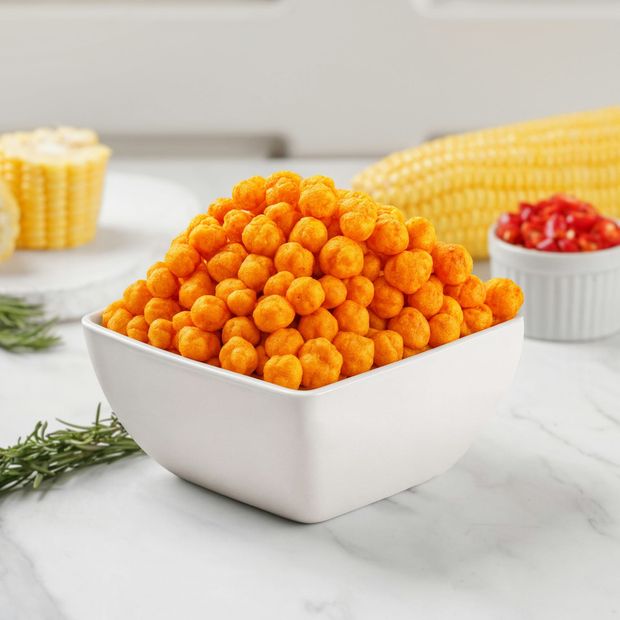
Can I Still Eat Cheese Puffs? Making Sense of Ultra-Processed Food
Abbie: Okay, Alex, I'm going to read you an ingredient list and I want you to tell me what it is. Okay, so let's go: milk protein blend, calcium caseinate, whey protein concentrate, whey protein isolate, glycerin, bovine collagen, hydrolysate, maltitol... I can't even pronounce that word.
Alex: I want some bovine collagen. That's good for you, I think.
Abbie: Polydextrose, water, cocoa butter, dry whole milk, roasted peanut pieces, peanut paste, sunflower oil, unsweetened chocolate, cocoa processed with alkali, salt, artificial and natural flavors.
Alex: Is it a candy bar, like something the kids would eat?
Abbie: No, it's actually a protein bar — the ingredients off one of these Barebells bars we bought, recommended by some influencer.
Alex: I haven't tried those yet, and I hadn't looked at the ingredients either. That doesn't sound like something I would eat.
Abbie: Well, you probably wouldn't eat it because it's got whey protein in it, but it was recommended as one of the healthiest protein bars out there. Pretty interesting, that whole list of ingredients, right?
Alex: Yeah, that's pretty eye-opening when you start looking at actual ingredient lists. And, you know, we want to be balanced — we're not going to tell you to avoid ultra-processed foods entirely, which is the subject of today's show, and why you're reading me this list of bar ingredients, I assume. But we are going to talk about why it's worth knowing what's in your pantry, and how to shift the balance without losing your mind.
Abbie: Yeah, exactly, that's the point of today. Ultra-processed food isn't just chips and soda — it's also the stuff that's sold to us as "healthy."
Intro
Abbie: Welcome to Practically Fit, Real Fitness Over 40. I'm Abbie.
Alex: And I'm Alex. And today we're going to talk about ultra-processed foods. And don't worry, this isn't going to be a "we're here to lecture you" situation, or an "ignore it, don't worry about it" situation either. Rather, in our true Practically Fit fashion, we're going to share data, insights, and some tips on how you might want to manage this.
Abbie: That's right. Processing is a spectrum, not a moral category. Most families eat some ultra-processed foods — the goal is for them to be the side dish of your week, not the main course. The aim is to shift the ratio, not purge the pantry.
Alex: Oh, I love that, Abbie — what a nice little quote. Yeah, absolutely. Our aim is to give you the information and some tips on how you can make small but sustainable choices that work for you, rather than being overly restrictive, judgmental, or ignoring the evidence. But first, let's limber up.
The Warm-Up: Does More Mileage Really Boost Your VO2 Max?
Abbie: All right, let's start with today's warm-up. Our first article comes to us from Alex's favorite website, Runner's World, and the headline is "Want to Improve VO2 Max? Wearable Data Points to the Workout Type That Boosts This Metric the Most." So this is about VO2 max — a reminder, if you don't know what that means, or if you have a Garmin watch and you're wondering what the heck it's always talking about: it's basically how efficiently your body processes oxygen. According to the article, quote, "high VO2 max is associated with reducing your risk of diseases ranging from diabetes to cancer to heart disease, and with a lower risk of all-cause mortality." So there's a real reason to pay attention to this metric if you have a fitness tracker, because it's good to have a higher VO2 max — there are even tables you can look up for what's considered good for your age. The article says, quote, "data from both Apple Watch and COROS suggest that overall volume plays a role in VO2 max changes, as more time on your feet can boost your overall fitness level." It goes on to say that participants in the Apple Heart and Movement Study — based on Apple Watch data — with above-average cardio fitness averaged more than 200 minutes of activity per week, while those with high VO2 max averaged more than 300 minutes per week, exercising more than 15 minutes longer per day on average than those with lower levels. They actually put numbers on this, Abbie — are you tracking so far? The data is basically showing that more exercise volume is better for your VO2 max.
Abbie: Yeah, yeah, got that.
Alex: Well, it also says that running 40 to 60 kilometers a week — which I do not do, about 25 to 37 miles — was associated with a 0.2% change in VO2 max. Upward of 100 kilometers, or 62 miles, led to a 0.5% change. In practical numbers, that could mean going from a VO2 max of 50 to a VO2 max of 50.25 — and I found this hilarious, because you're doubling your mileage for not even half a percentage point of improvement. That's what I was laughing about, pulling all this data from this fitness study and landing on something that minuscule. Although the article does say, quote, "that might not seem like a lot, but it could translate to meaningful performance improvements." I'll tell you what — I don't run anywhere near that many miles per week, and my VO2 max sits at 49 or 50 all year. I cannot imagine adding that much mileage just to bump it up by 0.25.
Abbie: Well, yeah, I find this really interesting, because — what did it say, 300 minutes of activity for people with a high VO2 max? I average about 300 minutes of activity on my Garmin — that's kind of my baseline. I'm generally between 350 and 500, depending. And I haven't run anywhere near the top of that mileage range in a long time — I'm normally running around 15 to 20 miles a week.
Alex: Yeah.
Abbie: And my VO2 max is in the top 1% for my age.
Alex: Yeah, I was just — so is that you're talking about intensity minutes?
Abbie: Yeah, like your activity minutes.
Alex: Yeah, okay, interesting — mine's between 200 and 300. So based on my VO2 max, that tracks with the data, but I can't imagine adding a ton of mileage, because I'm not running that far every week — I prefer shorter, faster runs. I just thought this was one of those articles where they find some weird data point and write an entire piece around it, but then at the end they come around and admit that, while higher volume is linked to higher VO2 max, long intervals — three-to-five-minute intervals at 5K pace — and threshold runs at your 10K pace are probably the most effective way to actually increase it.
Abbie: So I just run 100K a week.
Alex: Yeah, I'm personally proof of the opposite of that. I just thought this was a funny article — VO2 max is a cool thing to track, but I don't think you need to run 65 miles a week to have a good one. Anyway, thought that was a funny one.
What Even Is an "Ultra-Processed" Food?
Abbie: Okay, great. Well, we thought we'd actually start off with what even is an ultra-processed food, because sometimes we jump straight into things without stopping to think through the definition. Most researchers use a system called NOVA — capitalized — and it's used worldwide, which is nice, since it translates across multiple geographies.
Alex: Is that an acronym, NOVA?
Abbie: I don't know.
Alex: Oh, okay — I'll look it up. Go ahead, keep going, I'll look it up.
Abbie: I was more interested in what it did — I didn't dive into that. See, this is a nice insight into how our brains operate differently. It sorts food into four groups. Group one is unprocessed or minimally processed food — fresh fruit, vegetables, eggs, plain meat with no flavorings, milk, unprocessed oats. Those would all be group one.
Alex: By the way, it's not an acronym.
Abbie: Oh, really?
Alex: Would you like to know the origin of it?
Abbie: No — yeah, absolutely.
Alex: It's simply a name derived from the Portuguese title of the original scientific article that established this classification: Uma Nova Classificação de Alimentos.
Abbie: Oh, very cool.
Alex: Very cool — glad to hear it's not an acronym. I get tired of acronyms.
Abbie: Okay, great. So group two is culinary ingredients — oil, butter, salt, sugar. Group three is processed foods — things like cheese, canned beans, or fresh bakery bread, which usually have just a few ingredients added to a group-one food. They take something clean and unprocessed and add a couple of additional ingredients.
Alex: Like a canned food.
Abbie: Yeah, exactly — something that was just beans originally, and then you add a mild sauce, like a tomato sauce. And finally, group four is ultra-processed foods — industrial recipes that often use ingredients you'd never cook with at home: emulsifiers, sweeteners, artificial ingredients, modified starches, protein isolates, and so on.
Alex: Bovine collagen.
Abbie: Bovine collagen, or whatever that other word was that I couldn't pronounce.
Alex: You know, like — cooking with emulsifier? That just sounds unhealthy.
Abbie: I'm always getting my emulsifiers out and adding them in.
Alex: "Emulsifier" in my chicken. While this is a clear ranking outside of Whole Foods, it may be harder to recognize whether something is processed or ultra-processed, since there aren't obvious markers — like a label on the packaging. But I did read about a practical way to identify it: ask yourself, "could I make this in my kitchen with ingredients I'd recognize?" If the answer's no, it's probably ultra-processed. Canned beans are a great example — I could throw some beans in a pot, cook them, and add salt.
Abbie: Yeah.
Alex: Yeah. So that's cool.
The Push for Food Labeling
Abbie: Yeah, I really like that, Alex. Actually, it was really interesting, because we were in Spain last summer, right, and we noticed they had this ranking system on the outside of their food labels. So when we came to research this episode, I thought, ooh, is that ranking associated with NOVA? But it's not — it's a ranking associated with the calorie and macronutrient content of the food. Still, you could end up with something rated green or amber that's still ultra-processed, which I thought was really interesting. That sent me down a bit of a rabbit hole on labeling, and there's some news on that front. Here in the US, there's no official definition yet of ultra-processed foods, but in August, HHS and the USDA sent the first proposed federal definition out for final review.
Alex: Health and Human Services. And now the Brit —
Abbie: I was just getting stuck on that one today. It hasn't been made public yet, but it'll be interesting to see what comes out. The other thing I found is that while no nation currently officially stamps packages with an "ultra-processed foods" label, at least 15 countries — including Brazil, France, Israel, and Mexico — explicitly incorporate the NOVA classification, or recommendations to avoid or limit ultra-processed foods, into their official national dietary guidelines.
Alex: Yeah, and actually, I was thinking about this while you were talking — we were in Mexico a few months ago, and I noticed the packaging was doing a lot more with food labeling. I guess it was tied to this NOVA classification, but I found it quite impressive — way more informational than food packaging here in the US. I remember it would say — and I'm probably going to butcher the words, I haven't kept up my Spanish since the trip — things like exceso calorías, like excessive calories, or it would call out azúcares and sodium. I was really impressed with how they labeled food. And you couldn't miss it — even buying a Coke, or enjoying the chips, or as Abbie would call them, crisps, down there, everything had these very prominent labels on the packaging.
Abbie: Yeah, no, exactly — I think it's a really cool way to bring to light some of the decisions you're making about what you put into your body.
Alex: And there may be differences across US states too. We're in Texas — I know California, for example, may do more of this. Maybe we have some listeners in California who can tell us what they see on food labeling and packaging out there. And at restaurants, there may be more nutritional information shared as well. So why is everybody so worried about this group-four stuff? Well, first, it's a big chunk of what we eat.
The Science: Why Ultra-Processed Foods Make Us Overeat
Alex: Recent reports show that, on average, nearly 60% of the American diet is ultra-processed, which is wild to me — 60%. One study we found especially revealing was from the National Institutes of Health in 2019, led by a researcher named Kevin Hall. It was an ultra-processed-diet trial published in the journal Cell Metabolism, and it's often described as the first study to show that ultra-processed food actually causes people to eat more, not just that the two are linked. They had people live in a research unit, prescribed and tracked everything they ate and the impact it had — a highly controlled trial involving 20 people over a month. Participants were young, with an average age of 31 and an average BMI of about 27. It was a crossover study: for two weeks they ate an ultra-processed diet, and for two weeks they ate a minimally processed diet. The meals offered the same amounts of sugar, fat, fiber, and salt, and people could eat as much as they wanted, so you're getting a direct comparison. As an example, one ultra-processed lunch was quesadillas, refried beans, and diet lemonade — I assume industrially manufactured, packaged versions of those. On average, participants gained about two pounds on the ultra-processed diet and lost about the same amount on the minimally processed diet — and remember, this was just two weeks. That's a pretty significant swing if you multiply it out across a year; off the top of my head, that's probably 50 pounds or more. On the ultra-processed diet, people ate about 508 more calories per day, which is huge — and those extra calories came from carbs and fat, not protein. Even though the meals were matched on paper, ultra-processed meals pack more calories into each bite. Nobody told them to eat more — they just did. People also ate much faster on this diet, which makes sense to me, because you can tear through a bag of chips or a chocolate bar way quicker than it takes to eat a chicken breast. We have a bad habit of grabbing chips or something at the end of the day, and they go very quickly. Interestingly, participants rated both diets as equally enjoyable, so they weren't overeating because the ultra-processed food simply tasted better.
The UK Study That Backs It Up
Abbie: Yeah, that is fascinating, Alex, and it really plays into — you know how you can eat something whole, like one of my favorite lunches, a chicken salad, and feel really full, but then easily eat some rice cakes or chips afterward, because they just don't seem to take up any space in your stomach? I also found another study that backs up the one you just shared, Alexander — and I didn't do this deliberately, but this one happens to be from the UK.
Alex: Yeah, right — you had to bring in the Brit, huh?
Abbie: Alex had a US study, I found a UK study — from University College London. It was from 2022 — sorry, 2025 — published in a journal called Nature Medicine.
Alex: It was written by Charles Dickens.
Abbie: I know, it was just written by Dickens — oh, there's no S, it's Dicken et al. So I don't think it was Charles. Anyway, this was a trial run in 2025 with 55 adult participants with a BMI between 25 and 40, who normally got at least half their daily calories from ultra-processed foods.
Alex: So, like Wotsits and Skips — all the things we like when we go over to the UK.
Abbie: Absolutely. It was a crossover trial, like the one you talked about, Alex — everybody tried two diets. One group ate a minimally processed diet for eight weeks, then went back to their normal eating for four weeks, then did eight weeks of an ultra-processed diet. The other group did the same, just in reverse. The minimally processed diet included things like overnight oats or homemade spaghetti bolognese.
Alex: Were you in charge of cooking for this group? Because this sounds familiar.
Abbie: And the ultra-processed diet included things like breakfast bars and ready-made lasagna you throw in the microwave.
Alex: Meal deals.
Abbie: Yeah, absolutely. And while they weren't in a lab, like in the study Alex talked about, the food was delivered to people's homes — more than they needed — and they were told, just like in Alex's study, to eat as much or as little as they liked. The minimally processed group lost more weight — roughly double. The extra weight lost on the minimally processed diet came from fat and body water, with no loss of muscle, which I thought was really interesting. So even the "healthy" ultra-processed foods — things like protein bars and breakfast bars — seemed to work differently. One of the researchers' main theories was that those kinds of foods are soft and quick to eat, calorie-dense, low in fiber, and designed to taste so good that you don't stop eating them.
Alex: It's addictive.
Abbie: A hundred percent. And this is what really matters for us talking about fitness over 40 — unfortunately, as you get older, your body is less forgiving. That extra 500 calories Alex mentioned from the first study — at 25, you might burn right through that. At 50, it's probably showing up as excess fat on your body over time.
Playing Devil's Advocate: Is "Ultra-Processed" Too Blunt a Category?
Alex: Right — well, I'm going to play devil's advocate for a minute, like we've talked about before on this podcast. Every few years there's a new food villain — fat, then carbs, now this. Firstly, these categories make sense, but they feel a bit blunt or broad, especially the ultra-processed one. Within that category you'd have stuff I'd associate with being somewhat healthy — I drink almond milk every day, that's ultra-processed, same with multigrain bread. Some of these things, to me, just don't compare to chips, candy bars, and soda — those are very different foods. The other thing is these studies are only looking at one variable, the food, and then how that links to disease. But there are multiple factors to account for — exercise, sleep, stress. I don't know if they addressed that in the studies, but there could be other factors at play.
Abbie: No, absolutely, and they did acknowledge that they were only looking at one variable — food. But I think the fair take is there's enough evidence, even from these two studies, to be worth acting on, but not enough to panic over every single item that might fall into that group-four category. And I think one of the things we really focus on is that the pattern of your diet matters more than any single thing you eat. We keep certain things in our diet because we enjoy them, or because they're easy and fast and we're working parents — like a protein powder to get a quick protein hit before the gym. That's ultra-processed, but it's a good choice.
Alex: Yeah, I have protein powder almost every day in my smoothies.
Abbie: Exactly. Or, for example, we use frozen veggies as a quick way to get vegetables into our bodies, and into the kids' bodies.
Alex: Wouldn't those be like a group three on the scale?
Abbie: No, I meant the ones that have a sauce on them — they put a lot of industrial stuff into those, like the ones with a cheesy sauce. But honestly, if a shake after a workout helps you hit your protein goals, or it's a way to get your fruit and veg in for the day, I think we should be okay with that. That feels like a decent use of an ultra-processed food to me.
Alex: Yeah, I agree. And also, just the reality of living in the United States — I think it's almost impossible to avoid this stuff no matter where you're shopping. It's not like Europe, where you can just pop down to a fresh market daily. It's such a large country, and food is imported from so many different places, that it's genuinely more challenging to eat mostly from categories one and two on the NOVA scale.
Abbie: Yeah, I think that's fair enough, for sure, Alex.
Practical Strategies: The Traffic-Light System
Alex: Well, let's move into some practical strategies — the part you've come to expect from us. How do you eat less ultra-processed food without making your life miserable or reading every label at the supermarket? Or, as I like to call it, how can I still have cheese puffs?
Abbie: Yeah, good one.
Alex: The first idea is a simple traffic-light system — it's a similar concept to one used within the NOVA system, but just think of it like a traffic light. Green is whole and minimally processed foods: fruit, vegetables, eggs, meat, fish, beans, oats, plain yogurt, nuts — stuff we know is good, whole food. Build most of your plate from this category, and focus your at-home cooking around green, since it's harder to control when you're eating out. Yellow is processed foods and the more helpful ultra-processed stuff — things we mentioned earlier, like cheese, good bread, canned tomatoes, frozen veg with sauce. I actually think canned foods are a bit underrated — they've been around forever, and you can get some pretty healthy stuff out of them, you just have to watch the sodium, especially if you have high blood pressure, like I do. Protein powder, whole-grain wraps — use these freely, but with some thought, like a yellow light, proceed with caution. Then red is ultra-processed food that's easy to overeat — unfortunately, where my cheese puffs fall. Chips, cookies, candy, soda, most fast food, sugary cereal — even the "healthy" cereals you find at Whole Foods often have a lot of sugar.
Abbie: Oh, granola is another good example — a lot of granolas are a sugar bomb.
Alex: Yeah, we worked hard to find one we like that's better about that, because granola can otherwise be a good way to get more plant-based food into your diet. These foods aren't banned — they're just not something you want to drift into constantly. And there can be sneaky things in this group that masquerade as healthy but aren't — like we talked about in the cold open, or like you just mentioned with granola, fitness bars can have as much sugar as a candy bar. The real problem with foods like that, or those cereals, is that they're marketed as healthy, so you really have to watch for that. And if you do want to indulge in something from the red category — again, my cheese puffs — do it consciously and enjoy it. Put a portion out on a plate; I'm terrible about that, I'll just grab the bag and eat straight out of it. Sit down, eat it undistracted, and actively choose it — make it a hell yes, rather than something you eat without even thinking about it.
Abbie: I think that's a really great system, Alex, and I like that within it you're not labeling anything as good or bad — you're just thinking of it on a scale, and where you need to focus your attention. Red just means pay attention. It's okay to have something in red on occasion, it just shouldn't be 60% of your diet.
Alex: Yeah, and labeling foods as "bad" isn't a good concept — Jen and I talked about this a long time ago on the podcast. I think the more you start labeling foods as bad, the more it can impact the psychology of your eating, and actually not be helpful.
Add Before You Subtract (and Picking Your Battles)
Abbie: No, it's definitely a big trigger for disorganized or unhealthy eating. So I think that's a really nice way to think about it — you're making choices between categories and thinking about balance, but you're not banning anything, and for me, banning something is really unhealthy, because then I just obsess about it. Another idea I like to think about, for adding this into your day-to-day life, is adding before you subtract. One of the things I read a couple of years ago that fascinated me is that the human brain is hardwired toward addition — we're social creatures, we like being around other people, and we focus on adding in rather than taking away. So an easy hack is to do just that: put green food on every plate before you worry about removing anything. How can you add more green food into your diet — maybe berries with your cereal, or a salad alongside your frozen pizza? And then you can start thinking about what you want to remove. Second, as parents, we always talk about picking your battles, right, Alex? We don't want to take on every single thing, and I think the same is true here — maybe start with something you consume regularly that you want to step away from, like a sugary drink, or maybe you're over-relying on snack cakes or snack bars. Focus on that, and think about a healthier swap. If you love an iced latte loaded with syrups, sugar, and cream, maybe just switch that up a bit — you're not giving up the latte entirely, but moving to something with fewer of those add-ins. This works really well for me personally, because the minute I ban something, it's all I can think about.
Alex: Hey, good news — they just closed about 250 Starbucks stores, so that might be slightly easier to do on the iced latte.
Abbie: Yeah, well, I'm not really a massive Starbucks person, as you know. But if I told myself I'm never eating chocolate again, that's just not going to work. It's not practical. Or another example, which speaks to Alex: if you really love Chick-fil-A, make some swaps on the menu — maybe you still get the sandwich or the nuggets, but you swap the fries for a fruit cup. Alex does this often.
Alex: Yeah, because I go out to eat almost every day for lunch at work, just to get out of the office, and there's only so many options near where I work, so Chick-fil-A usually happens about once a week. Another one, beyond the fruit cup — they have a kale crunch salad now, just kale with some almonds or nuts on top. It's pretty good.
Abbie: Nice, that's a great swap — you're still having your chicken, but not the fries, which, honestly, when you look at the calorie breakdown, are crazy compared to the chicken.
Alex: I also wonder about that Chick-fil-A sauce, which is highly addictive — that's super ultra-processed.
Abbie: Oh, definitely. And the last one from me is to have a few "good enough" meals for when you're truly wiped out at the end of the day. One of my favorites is baked beans on toast, or eggs on toast, or a rotisserie chicken you grab from the hot counter.
Alex: Still affordable compared to some things right now.
Abbie: Yeah — have that along with a bagged salad. One of my go-tos for breakfast, if I'm running tight on time, is Greek yogurt with fruit. It's really good to have some of these default options, because when you're tired and wiped out is exactly when you tend to go raid the pantry and eat the first thing you find, or default to fast food and not make the best choice.
Alex: All right, great advice there, Abbie.
Pantry Confessions: What We're Keeping, Swapping, and Still Working On
Alex: We thought we'd close this episode out by talking about our own pantry, with some confession time. We have three teenagers, so our pantry is not a green-light zone — it's more of a red-light district.
Abbie: Definitely.
Alex: Yeah, a little lurid there, babe. Anyway, we thought it'd be fun to take three ultra-processed foods each and play a bit of a game — no guilt-tripping each other — one we're keeping, one we have made or will make a commitment to swap out, and one we're still thinking about. Abbie, you go first.
Abbie: Okay. One I'm keeping, no guilt, would probably be pita chips. I love the crunch of a chip, and pita chips feel a little healthier to me than regular chips — I often put them alongside my salad, or on a plate with carrots, cucumber, tzatziki, that kind of thing, and the pita chips, so it balances out and gives you that nice crunch. So I'm keeping my pita chips, no judgment. One I've swapped out over the last few years: I used to regularly eat cereal for breakfast. I thought it was a healthier choice, and to your point, Alex, even the "healthy" cereals have a ton of sugar in them. But the main thing is I'd be starving again about an hour and a half later — they just don't fill me up.
Alex: Yeah, honestly, I think the only cereal I'd put in the "healthy" category would be literal plain shredded wheat. I did an experiment at the grocery store a few months ago — I was like, could I actually find a cereal I like that's genuinely healthy? We ate cereal growing up, it's huge in the UK too, you just took it for granted — cereal's good for you, it's healthy. But it's almost impossible to find one that isn't loaded with sugar. Even the "healthy" ones — the only thing I could find on the cereal aisle at this grocery store, which shall remain nameless, but does carry a lot of "healthy" options, was plain shredded wheat. That's it. It was mildly infuriating.
Abbie: Yeah, I know, I agree. And like you, I grew up eating cereal — it's a running joke in my family that my mum would come home from a dinner party and have a bowl of cereal. I never really thought about it, because I figured I was picking healthy cereals — they had fiber, heart-health claims on them — but really, not great. So that's one I've made a commitment to swap out and have really focused on. One I'm still thinking about... that's a good one. Maybe, after our cold open, protein bars should be on that list.
Alex: I haven't eaten many of those recently, because I feel like I'm getting that protein hit from the smoothies — we use Kachava.
Abbie: Yeah.
Alex: Maybe protein bars, though.
Abbie: Your turn.
Alex: Okay, so my confession: one I'm going to keep, no guilt, is tortilla chips. Of the types of chips out there — not that they're healthy, but they're not as bad as other things — you can find brands with minimal salt, since salt's always a concern for me with blood pressure. I just love chips and salsa, and you can also use them with hummus, or my favorite weird thing, mixing hummus and salsa together.
Abbie: He puts it in a bowl, it looks great.
Alex: So I'm keeping the tortilla chips. And the one I'm making a commitment to swap out — since I've been joking about it all episode — is the cheese puffs, at least until we go to England and I get some Wotsits.
Abbie: That is cray-cray.
Alex: What I'm going to swap them out for is still kind of a processed food, maybe ultra-processed, but I've found some crackers that are really more whole-grain, so maybe those would be a better choice to snack on, or I could do nuts instead. So I'll do that swap. One I'm still thinking about — I was struggling with this one earlier, because I didn't think about it ahead of time, figured I'd come up with it in the moment. Can you think of anything I eat that's super ultra-processed, besides chips?
Abbie: I mean, I think that's a thing you kind of gravitate toward.
Alex: Yeah, because — besides the bars, which I used to do all the time and have really stopped doing — what about lunch meat?
Abbie: Deli meat. I saw a video about deli meat, or hot dogs and sausages.
Alex: Okay, that's what I need to think about.
Abbie: Because I saw something from a physician saying he'd only list three things he'd absolutely tell someone to never eat, and one of them was deli meats and sausages — he said they're classed as carcinogenic, in the same category as tobacco.
Alex: Right, and I'll typically have one of those sausage rolls, maybe once a week, from the coffee shop or wherever, and I'll occasionally get a sandwich from somewhere like Jersey Mike's, which is processed meat. Okay, that's one I'm going to think about.
Wrap-Up
Abbie: Okay, well, that's it for today's episode. If you remember just one thing from today, it's this: you don't need to purge your pantry, just shift the ratio — green most of the time, amber when it helps, and red on purpose. And like Alex mentioned earlier, let us know how it goes. Tell us about your experience with ultra-processed foods where you live, and tell us your favorite amber food that you're keeping, guilt-free.
Alex: Just translating for the US audience — amber is yellow.
Abbie: Yeah.
Alex: Red, amber, green — we even do our traffic lights differently, how annoying is that? Well, we hope you enjoyed this episode. Stay tuned for our next one, where we'll have a special guest interview with Matt Fitzgerald. He's an ultrarunner and author of a new book, Dying to Run. He's written a ton of books on running, and this one tells a really fascinating story about how long COVID impacted his fitness and running life, and how he worked to overcome it. We hope you'll look forward to that interview next week. If you enjoyed the podcast, please leave us a review on your favorite podcast platform — Apple, Spotify, wherever you listen. Go check out our website at practically.fit — you can sign up to get the podcast directly to your inbox, or to get occasional content from us. And if you've got comments or stories, shoot them our way at alex@practically.fit. And remember, when it comes to fitness, you don't have to be perfect, you just have to be practical. We'll catch you on the next one.