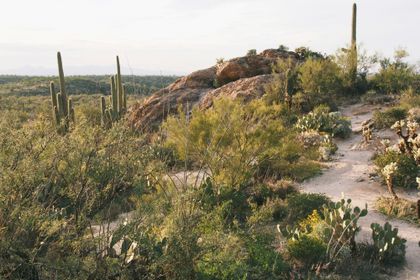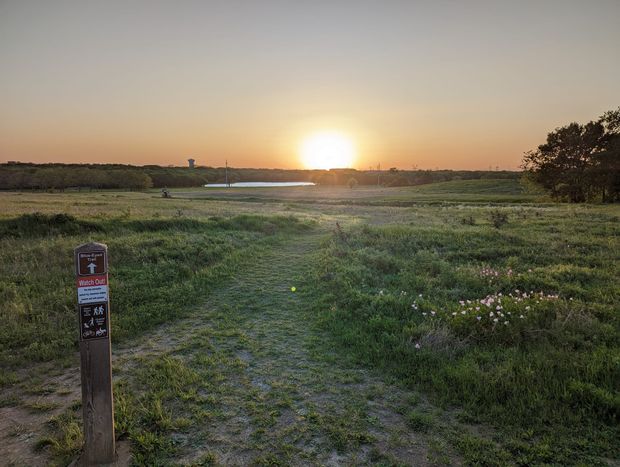
For this week's podcast, Abbie and I are lacing up our shoes and heading into the woods. Trail running has become one of our favorite ways to move and decompress, and in today's episode, we break down everything you need to know to get started with trail running, stay safe and actually enjoy it.
Together we walk through the gear you actually need (trail shoes are non-negotiable), how to recalibrate your expectations on pace and terrain, and what the research says about the physical and mental benefits of getting off the asphalt.
We also get honest about the challenges: ankle sprains at the exact wrong moment, snake encounters, sudden weather shifts, and the very real possibility of getting completely lost.
Plus, on this episode's edition of the Warm Up: new research shows that just 10 minutes of super-slow jogging can sharpen your thinking and boost your mood. And, a look at the growing science behind why travel is genuinely good for your mental health.
Enjoying Practically Fit? Listen on Apple Podcasts, Spotify, Amazon Music, or YouTube, or wherever you get your podcasts. If you like what you hear, a rating or review on Apple Podcasts really helps. Get every episode and our weekly content straight to your inbox by subscribing at practically.fit. Have a story or comment to share? Email us at alex@practically.fit.
Read The Transcript
Abbie: Welcome to Practically Fit, Real Fitness Over 40. I'm Abbie.
Alex: And I'm Alex.
Abbie: And today we're talking about getting off the beaten path — in our case, trail running.
Alex: Yeah, this is something we both really enjoy, because you're getting out in nature, and trail running has really become one of our favorite ways to do that. For me, I also love hills, elevation, and even steep climbs, so that's a real plus when we hit the trails. Today we're going to chat through our experiences with trail running, with some personal insights, some practical tips, and of course some studies to back up what we're sharing. But first, let's hit the warm-up.
The Warm-Up: Slow Running and the Mental Health Case for Travel
Alex: Abbie, we've got a couple of articles today for the warm-up, one of which I'm really excited to share. Let's start with the Washington Post — the headline is "10 Minutes of Super Slow Running Can Benefit Your Brain and Mood." This was based on a recent study, and quote: "In the study, 10 minutes of super slow jogging at a pace barely exceeding walking speeds almost immediately changed people's brain activity, improved their thinking skills, and raised their moods." A key thing here, Abbie, is that it has to be running — you can't just walk slowly. This study wasn't saying just getting out for 10 minutes improves your mood; it's saying getting out and running very slowly for 10 minutes improves your mood. According to the researchers, the interesting part is that running's biomechanics influence the brain in ways other activities don't. Do you find that surprising?
Abbie: No, actually, I don't — one of the things I've always said, and one of the reasons I love running, even if I hate the first mile, is that whenever I have a problem to work through, I find running is the best way for me to do that. So I do think there's a different connection, or unlocking, that running brings to your brain, and I don't find the same with walking.
Alex: Yeah, same here. I thought it was interesting that the super-slow pacing specifically was what improved mood — and to preempt the "well, maybe walking does the same thing," they actually compared running and walking on treadmills. The people running at the gentlest possible pace reported being more cheerful and performed better on a cognitive test. So the big takeaway from the researchers' perspective is that you can go for an easy 10-minute run before a big presentation or a mentally demanding task and perform better as a result.
Abbie: That's pretty cool to think about. I've always thought about running at the end of the day, to work through my day, but never really thought about doing it beforehand.
Alex: Yeah, I'm not sure about the practicality of it, honestly — I don't know how many people can just go do an easy run right before a big presentation. It seems like it'd work great if you're working from home, but if you're in an office setting, or out in the field, that's a lot more challenging. Especially if you're someone who sweats even on an easy run — you kind of need a shower after that.
Abbie: Well, they might be talking about doing it the morning of the presentation, not necessarily right before it. I'd think those endorphins and that mood boost would last a while, so maybe you do it that morning and still get some of the benefit later in the day.
Alex: Yeah, and that's something I've actually enjoyed this summer — when I get up early, like 5:30 a.m., or you get up early some days too to run, I definitely feel happier and more energetic heading into work and once I get there. So I agree, there's definitely something to this. All right, let's hit our next article — this one's from the Wall Street Journal, and I'm particularly excited about it for you, Abbie, honestly it felt like this article was written for you. The headline is "The Surprising Mental Health Benefits of Getting Away," looking at various studies on the mental health benefits of travel. Travel's something that's really important to you, isn't it?
Abbie: Yeah, I love traveling, I love planning travel, I love having a trip on the horizon. I couldn't agree with even the title of this article more — I'm a big advocate for people taking a break from their routine, using their PTO. I think it's so important to get a change of scene and a change of pace. Personally, it makes a massive difference for me.
Alex: Yeah, and we'll get to the planning piece in a second, because there's actually something in the article about that. It looked at a bunch of studies, so we won't go through all of them, but it says, quote, "A growing body of research suggests travel is more than a luxury or an escape. It may be a legitimate tool for improving mental health, one whose effects scientists are only beginning to understand." It goes on: "Researchers say travel away from our usual environments exposes the brain to novel experiences that require greater mental engagement than during our everyday routines." So at home, the brain is essentially on cruise control, and travel forces the opposite — new food, new streets, new people, new decisions — and that friction is what builds confidence, sharpens memory, and gives us a sense of satisfaction that enhances cognitive well-being. So basically, getting your brain out of cruise control and out of your normal routine makes you happier.
Abbie: Yeah, that makes a ton of sense to me, that's exactly how I feel. And you know this about me, Alex — when we get back from a vacation, I'm already planning the next one. Not that it's happening immediately, but I think there's something really powerful about having those things on the horizon — new experiences, new environments, new food, new people. I love it.
Alex: Well, one of the studies they cited actually speaks to that planning piece — the article says, quote, "Even the anticipation of a trip leads to feeling happier about your family, your health, and your finances than when you have no travel planned." That's spot on for you.
Abbie: Yeah, definitely.
Alex: Tick, tick, tick. Another study they looked at found that the further you travel — internationally versus domestically — the less likely you are to feel depressed or isolated. So getting completely out of your normal environment, somewhere totally foreign, seems to reduce feelings of isolation, maybe by exposing you to people from across the world. Basically: travel as far away as you can, as often as you can.
Abbie: Yeah, one of the things I often reflect on is that there's more that unites us than separates us — I think that's so true. When you visit different countries and continents, a lot is different, but a lot ends up feeling familiar, and you can connect with people anyway. I've been really fortunate to travel a lot through my life, to lots of different countries and environments, and there's plenty that's different, but plenty that feels familiar too, and you can build connections. I think it makes the world feel like a less huge place — it gives you different experiences and perspectives, and definitely makes you feel less isolated. The one thing that does register for me is that international travel is more stressful for people — different time zones, jet lag, different languages and cultures — but I'd still say the benefits outweigh those drawbacks.
Alex: Yeah, because that friction, like the article said earlier, is what helps build confidence once you conquer those situations. A couple other takeaways from the article — it talked about the importance of experiencing awe, which, from a psychological perspective, makes you happier and makes your problems feel less significant. So if you're somewhere looking at amazing scenery — here in the U.S., say you're staring at the Grand Canyon — you feel that sense of awe, and it leads to being happier. You look at the Grand Canyon and think, you know, compared to the scale of this canyon, compared to the beauty of nature, that work problem probably isn't as big a deal as I made it out to be. Your problems shrink when you're staring at the sun setting over the ocean. We went to Mexico earlier this year, and I remember just sitting on the porch looking out at the Caribbean Sea from the island we were staying on — it definitely gives you that sense of awe, and it's incredibly relaxing.
Abbie: Yeah, definitely, I 100% agree, which is why I'm always drawn to beautiful nature — a beach and the sea, or mountains, or just open landscapes. I think it puts things into perspective that you might otherwise ruminate on or obsess over day-to-day, and helps you rebalance, release some of that pressure or routine. It reminds you there's more to the world than the five square miles you occupy every day.
Alex: Yeah. Last takeaway from this one — there was more of what I'd call an anthropological, or maybe sociological, study they looked at, a series of interviews with frequent travelers. What they found was that travel essentially helps you loosen up and be your, quote, "authentic self." I think it's because when you're somewhere you don't know anybody, you worry less about your behavior or how you come across to people. So the outcome is that travel helps people feel more free to be themselves. I thought that was really interesting.
Abbie: Yeah, that's really cool. I think it also helps you grow into being yourself, because you're picking up new experiences and different perspectives. I reflect on that a lot — I think you risk having a pretty narrow perspective if you never see anything different from where you were born and grew up. There's nothing wrong with that, I'm not trying to be judgmental, I'm just saying if you go explore different parts of the world, different countries and cultures, you can't help but come away with a broader perspective on life. I think it helps you discover who you are, because sometimes you actually have to go have those experiences to figure it out.
Alex: So, a lot of great takeaways from this one — highly recommended if you can find it online. Again, the headline is "The Surprising Mental Health Benefits of Getting Away," from the Wall Street Journal. Check it out — for your mental health and well-being, try to get out there and travel as much as you can. That's the key takeaway, and that's it for today's warm-up.
What Is Trail Running, Anyway?
Abbie: So let's jump into our main topic today, trail running. I thought it might be good to start by just talking about what trail running actually is, because I don't know about you, Alex, but I don't think I'd really heard of it as its own thing until I got more involved with a local run club.
Alex: Yeah, honestly, I hadn't really paid much attention to it as a, quote, "discipline" of running before I met you and you started telling me about it. I just wasn't aware there was such a large trail running community out there, with actual races built around it. My whole running orientation was road running — urban areas, even out in the country, but on pavement. I had no idea this specific form existed and that it was such a big deal.
Abbie: Yeah, and as we'll get into a bit further along, it's quite different from road running and has a whole subculture around it, which I really love. Basically, trail running is running — or hiking — on unpaved surfaces: dirt tracks, forest tracks, mountain trails, instead of asphalt or concrete roads. When I first heard of it, I always associated trail running with mountains, and indeed some of the most famous trail races in the world are mountain races — Leadville in the U.S., the Ultra-Trail du Mont Blanc in France, or the iconic, brutally difficult Barkley Marathons — if you want a fun watch, go watch that documentary, it's fascinating. But it doesn't have to be mountains at all — you can trail run in all kinds of environments, including urban ones. Local paths, gravel roads, nature preserves, or bridleways are all great for a first outing.
Alex: Yeah, even here in a big city like Dallas, we've got different places we can get to within 30 minutes of our house that can really feel like you're totally out of the city. This morning we went to a local nature preserve, and that one doesn't quite feel like you're out of the city — we were commenting on how, at least on one corner of it, you can really hear street traffic.
Abbie: Yeah, but the environment around you still feels great — very wooded, lots of vines and branches and forest. But you're right, you can hear a lot of road traffic on that one, so it's hard to fully switch your brain off and feel like you're in the forest.
Alex: Jet planes flying overhead too, that kind of thing. But we like going to different spots around the Metroplex — occasionally we'll get out to state parks. We've got an amazing state park system here in Texas, and you can run all the trails in those, though that can mean an hour or two out of town. We don't do that as much these days, but no matter where you live, there's typically a nature preserve or park with dirt paths to run on. It's really worth looking into finding a place to go trail running — it can make you feel like you're out of the city if you live in an urban area, or if you're more rural, there are probably trails nearby too.
Abbie: Yeah, absolutely, and we've got a couple of favorites in and around Dallas where you'd literally never know you were in the city — it's so quiet, feels like the middle of nowhere, almost a little surreal, but beautiful, because you feel like you've escaped the city for the day, which can be really nice. I started trail running more consistently about eight or nine years ago, running with a local run club — it was actually one of the things I took up when I moved to the U.S., to Dallas specifically, to find community and make friends. It really was a great way to build both. Some friends from that club, who I ran with a couple times a week, asked if I'd join a race called Ragnar. I said yes without really knowing what it was — looked it up afterward and found out it's this weekend-long trail relay race, running one after another across three or four different mountain bike trails. Since I'd said yes before checking, I figured I'd better get out on some trails and actually learn how to do this thing called trail running. So I started finding local trails to practice on ahead of the race. What about you, Alex, how did you get into trails?
Alex: For me, like I said, I always knew about our state park system, but I typically went there to hike, not run. I don't know why it never crossed my mind that I could be running on these trails — I rarely saw anyone doing it, though I do think it's gained popularity over the past five to ten years. I was mostly just going out for hikes before I met you — you were really the one who introduced me to trail running. We've done a few races here and there, a couple we really like in the metro area, and I've been thinking we should do another one this fall since we've been trying to get back into it. Generally, for me, it's about working trail running into my normal weekly routine. The thing I struggle with is the weather — like today, or a couple weeks ago when we visited my mom and ran some trails we love near where she lives. If there's any rain, it can really mess up trails, make them impassable — they often close trails when they're muddy. In Texas, that effectively means there are rainy seasons where trail running gets harder, usually fall and spring, when trails are muddy and closed a lot. In summer, they're open, but then it's brutally hot outside. Like this morning we went out around 8 a.m., which was great because we had shade, but the trail itself was completely parched, dry, and hard. So trail conditions, I think, are one of the biggest factors to consider if you're getting into this.
Abbie: Yeah, I totally agree, Alex — it really does feel like you need three backup plans when it comes to trail running.
Alex: How many times have we been looking forward to a trail run, and then there's a washout of rain, and we're like, well, we're not doing that this weekend, and probably not next weekend either, since it'll likely still be closed.
Abbie: Yeah, and especially because a lot of the trails we use are shared mountain bike trails — it'd probably be different if they were hiker-only, they could maybe stay open when it's a bit wet and muddy, but mountain bikes can really tear up a trail in those conditions, so it makes it tough. One of the things I loved when I first got into trail running is that it just feels different — we'll get into the impact on your body a bit more — but it's also a really different community: very friendly, very welcoming. The running community as a whole is like that, but I think trail races are way more relaxed than road races, much less competitive, very supportive.
Alex: There are definitely people out there just smoking the field, almost competitive trail runners, but generally the vibe at a trail race is very relaxed — totally different if you've only ever done road races. I think you'd be surprised by it.
Abbie: Yeah, definitely — and some pretty awesome aid stations too, with all kinds of yummy snacks.
Alex: That's right.
Abbie: So if someone wants to get into trail running and hasn't done it before, what would we recommend they consider?
Trail Running Gear Essentials
Alex: Yeah, first is gear. You can use a lot of what you'd already use on the road — your watch, your normal running clothes — but the thing we'd really flag is investing in a pair of trail running shoes if you're going to do this regularly. If you're just heading out on a gravel road, you can probably get by with road shoes, but as soon as you're on actual trails with roots, rocks, or mud, or somewhere with a lot of elevation, mountains or big hills, you'll really feel the difference trail shoes make. They're a bit beefier than road shoes and emphasize traction a lot more, so if you have to run on a road just to reach the trail, you'll notice they're less comfortable there — but once you're on the trail, it makes a world of difference. Think of it like your normal running shoes are the tires on a road bike, and trail shoes are the tires on a mountain bike. I remember when you first told me about trail running, I got super excited and we went out to a popular local trail for running and mountain biking, with a lot of ups and downs and tree roots. I was in my normal running shoes, had a lot of trouble, and felt genuinely unsteady the whole time. As soon as you switch to trail shoes, it makes you so much more confident — the grip is amazing. Another thing worth flagging is having certain gear with you before heading out, especially on longer or more remote trails — things you might already use for regular running, but that become important out there. Number one: bring a hydration pack with both water and fuel, some food or snacks, because on a longer trail run with a lot of elevation change, it can get demanding, and it helps to have fuel on top of hydration to get you through those climbs. Another thing I'm a bit more resistant to, but Abbie will tell you is important, is bringing a headlamp, especially running in low light or after dark — and you've actually done races that run straight through the night, like that relay you mentioned. Abbie, why is a headlamp so important?
Abbie: Honestly, without it, you're going to struggle, for sure. Like you said, Alex, a couple of the races I've done are overnight relay races, and you just wouldn't manage without a headlamp, especially out in the countryside, where there's no light pollution and it gets genuinely dark. You won't be able to see, and you could easily end up off the trail, or flat on your back because you didn't see a root you tripped over.
Alex: Yeah, Abbie gets on me sometimes because I'll occasionally run when it's dark, and she'll say I need a headlamp, but I don't love using one — for some reason my brain would rather not see five feet in front of me than deal with all the bugs that seem to fly right at your face once you turn one on.
Abbie: Yeah, it definitely takes some getting used to, but on a technical trail — meaning one with roots, rocks, ups and downs — it's really hard to run safely without a light.
Alex: Yeah, the last gear item we'd recommend is a watch with GPS or trail maps, or bringing your fully charged phone in your pack. I really like the AllTrails app for this — if you're heading into a park, you can download the map ahead of time and have it offline, in case your GPS drops or you lose signal. The key thing is just having a reliable way to access the trail map, because there are often a lot of offshoots or unmarked forks, and taking a wrong turn can add a lot of time getting back to where you're supposed to be. We've done that more than a few times, thinking, that was definitely not the right way.
Abbie: Yeah, absolutely — some trails are really well marked, some state park trails we've been on have been great, and some have been terrible, where you're just like, I have no idea where we are. Remember that one time, Alex, where we genuinely felt like we were wandering off the trail?
Alex: Yeah, we were basically just in the woods at that point. So having that map — again, the AllTrails app is great, since you can download it to your phone ahead of time, and even with spotty signal or GPS, it can still locate you on the map. Highly recommend that if you're getting into trail running.
Trail Running Technique: Watch Your Feet, Adjust Your Pace
Abbie: So, moving away from gear — there are a few things I've noticed over the years doing this that feel pretty different from running on the road, track, or treadmill. The first, which I'm honestly still learning, is that it's really important to always look at your feet. That can be hard if you've been a road runner for years, since you're used to looking ahead, not down. But you need to watch for hidden roots, loose rocks, or surprise companions on the trail floor — snakes or spiders, if you're here in Texas, which show up often. This actually bit me today — I landed flat on my backside because I probably wasn't paying quite enough attention, tripped on a vine on the ground, and ended up splat on the trail.
Alex: Yeah, I just heard you go down, stopped, came back, and asked what happened, and you said, "what does it look like happened?"
Abbie: I just meant it was kind of a silly question, since I was clearly sitting on the ground having tripped. But it really is such a different mindset from road running, that consciousness of looking down at your feet. It has hidden upsides too — it just feels different in a good way — but it's definitely a "to look" habit you have to build. I've also thrown my arm out more than once to stop Alex from running past me.
Alex: And I'm like, what are you doing? And she's like, snake.
Abbie: So, definitely keep your eyes peeled. The second thing, which also took me a while to learn when I first started, is adjusting your expectations, especially around pace. As Alex said, trails generally have some elevation to them — that's kind of the whole point, going up and down. General guidance is that your trail pace is usually 30 to 90 seconds slower per kilometer, or one to two minutes slower per mile, than on a smooth road. Personally, I can be quite a bit slower than that range, especially on hilly or technical trails, like the one Alex mentioned by his mom's house that's very up and down with some steep sections. So pace really isn't a great barometer on trails, especially technical ones with a lot of loose rocks or undulating terrain — heart rate is a much better indicator of your actual effort. If you're not going for an all-out effort and your heart rate spikes, that's a good cue to slow down.
Alex: Yeah, today was a good example — that was a relatively flat trail, not too technical, only a couple of technical sections with some downed trees or vines across the path. We ran about 12-minute miles on that, and again, that wasn't a particularly challenging trail system. For an easy-ish pace, 12 minutes a mile — if I were doing that on the road, I'd feel like I was standing still.
Abbie: Yeah, absolutely, and we were going for more of an easy run, so my heart rate was right in that easy zone at that pace. When we've gone harder at a trail race, like Dinosaur Valley, I think I was around 10 and a half to 11-minute miles, which was pushing it.
Alex: Yeah, and I did a five-mile one where I think I was around 8:50 to 9-minute miles, and I did really well — placed pretty high in the race. So that's pretty challenging in trail terms.
Abbie: Alongside pace — with more serious elevation, you may need to walk, and that's not unusual at all. Even top trail racers will walk a lot of the course, especially really steep uphills at higher elevation. Some general advice is: walk the uphills, run the downhills and flats. Though I'd actually be a little careful running downhills too — that's where you can end up falling or hurting yourself. So my main takeaway is just feel your way on the trail — if your heart rate spikes or the trail's getting tough, slow down or walk, there's no shame in it. And one of the big benefits is that it lets you actually take in your surroundings a bit more, which is one of the best things about being out on a trail in the first place.
Alex: Yeah, one race I mentioned earlier stands out to me for exactly that reason — youthful exuberance. I was running near a cross-country runner, probably still in high school, at roughly the same pace as me, and she kept trying to push and power up the hills. I tried to say, hey, pace yourself, just trying to be helpful, but by the time we hadn't even hit the biggest hill yet, she was already yo-yoing on her pace from pushing too hard early. By the time we got to the big climb, she just fell off completely and I never saw her again. Good lesson, though, even for younger runners who think they can just power through — the elevation will get you eventually. It's all about knowing the course and knowing where you actually need to slow down.
Abbie: 100%. And I'd say if you get into trail running and want to start racing, it's a great idea to practice the course ahead of time, so you know the terrain. Last thing — know you'll be sharing the trail with others: walkers or hikers, sure, but also likely mountain bikers, and as we mentioned, some animal friends. It's worth researching ahead of time and checking any posted guidance, especially on a mountain bike trail, so you know whether you're running in the same direction as the bikes. More often than not, bikes go one direction and runners and hikers go the other, and it's really good to know that so you set off correctly. It's actually a lot easier running counter to the bikes, because you can see them coming and step off the trail, since these trails tend to be pretty narrow.
Sharing the Trail: Bikers, Hikers, and Wildlife
Alex: Yeah, that's one of the real downsides of shared trails, in my opinion. I prefer trails where I know either bikes aren't allowed, which is rare around here — the one we ran this morning doesn't allow bikes, or at least didn't used to — or where there just aren't that many people out. There's one trail near us where bikes go the same direction as runners, and while it's a great trail, I found that setup to be a pretty terrible experience, because riders suddenly come up behind you, and if they don't announce themselves, you may not even know they're coming — it gets a little dangerous.
Abbie: Yeah, that's exactly why I prefer running counter to the bikes. But like you said, there's one trail near us that I do love despite the number of mountain bikers, and it's kind of frustrating because you're constantly stepping to the side of the trail every few seconds to let a rider pass. The one I really loved, though, was a trail a bit further out that's shared with a bridleway — we saw some horses out there, which always makes me happy.
Alex: That's right. Well, there you go — some general guidance on trail running if you're interested in getting into it. We've covered gear and some key tips, so let's talk about the pros and cons we've found from getting out on the trails.
The Pros of Trail Running
Alex: Let's start with the pros, Abbie. One is that it's generally a more physically challenging workout, thanks to the uneven terrain and hills — even though your pace is slower, it really works a different set of muscles. If you haven't done a hilly trail run in a while, you'll feel it the next day. I think it gives you a great workout, in some ways more physically challenging than even a tempo run on the road. The other good thing is that softer trail ground absorbs shock better than asphalt or concrete — a lot of urban running or shared-use paths are all concrete, which can be pretty hard on your joints over time. There's actually research on this: a 2023 randomized controlled study published in the journal Healthcare, led by a researcher named Rapelt, directly compared the effects of trail running versus road running on performance. They split sedentary, novice participants — people who weren't already runners — into two groups, one training strictly on natural trails, the other strictly on paved roads, both doing supervised, moderate-intensity training blocks. Interestingly, the trail group showed significantly higher improvements in predicted VO2 max — your aerobic fitness, basically how efficiently your body uses oxygen — and in stride-time single-task efficiency, compared to the road group. The researchers concluded that navigating the changing surface density and inclines of natural trails forced a higher baseline of muscle coordination and physiological demand, boosting fitness faster than flat asphalt did. That's part of why I really like trail runs for a weekly easy run — I think it still delivers a real challenge and can help your overall fitness even if you're training for something like a 5K.
Abbie: Yeah, I think that's fascinating, and I agree — it can train you harder while somehow feeling like less impact on your body.
Alex: Yeah. Another important pro, which we've touched on already, is just getting away from the hustle and bustle of daily life. If you live in an urban area, you can often find places that feel completely removed from the city — we've got a nature preserve right in our own neighborhood, and sometimes when I'm out there, it's about the closest I've found to feeling like I'm back in England, visiting your family, even though it's right in the middle of our suburb. Getting out and exploring trails in your own city, or getting out of the city entirely into the countryside or state and national parks, can really help — there's a lot of research on how valuable time in nature is for well-being, which we touched on earlier. Another interesting piece is the focus trail running requires — you have to watch out for roots and rocks, and some of us occasionally miss those.
Abbie: One of us has fallen more than once.
Alex: It'll happen eventually if you keep doing this. But that required focus actually makes the run feel more engaging, more mindful, and less repetitive — especially compared to a treadmill, which we've been doing more of lately since it's been so hot here in Texas, and it's just the worst.
Abbie: Yeah, the miles crawl by so slowly on a treadmill.
Alex: Right, and today we did about three miles of easy trail running — no music needed, we just get out and run together, fully focused on the terrain. There's also this connection between natural landscapes and mood that I mentioned earlier — getting into the countryside and how it affects cognitive focus, even reduces anxiety. We found a 2023 study published in Scientific Reports called "Exercising Is Good for the Brain, But Exercising Outside Is Potentially Better." It included 30 participants, all of whom completed both arms of the study — a 15-minute indoor walk and a 15-minute outdoor natural walk on separate occasions, letting researchers use each participant as their own baseline. They found that exercising outdoors in natural environments significantly enhanced measures of executive function — brain functioning and cognition — compared to the exact same exercise done indoors. Specifically, outdoor natural exercise led to a greater increase in the amplitude of something called the P300 component, a marker of brain neuroplasticity and cognitive processing, along with faster cognitive reaction times. So basically: good for your brain.
Abbie: Yeah, that is amazing — it's basically saying being outside in nature, and this wasn't even running, just walking, improved cognitive functioning. I love that study.
The Cons and Risks of Trail Running
Alex: Yeah. So, the flip side of all this is that it's important to pay attention to all aspects of training and recovery. There's another study, published in the Journal of Sports Sciences, that looked at how a runner's psychological profile directly correlates with running-related injuries — pretty interesting, and it found a real multifaceted link between a trail runner's mind and their physical body. Trail runners presenting with high psychological stress, chronic mental fatigue, high cognitive anxiety, and poor sleep quality had a significantly higher risk of an acute trail injury. So if you're tired, anxious, or generally not in a good place mentally, yes, there's still that benefit to getting outside, but you're at a higher injury risk if you can't stay focused on the run — the uneven terrain really demands high concentration. If you're experiencing mental burnout, you can actually get delayed stabilizer-muscle activation, meaning your body just isn't tuned in to what it's doing, and that's when you fall — like Abbie did today, though to be clear, that one really was just a poorly placed tree root, not fatigue. Interesting side note, though — if you're in a state of burnout, it might be worth doing a walk instead of a run.
Abbie: Yeah, that makes a ton of sense. Everything we've said requires so much more awareness on trails, watching for roots — so if you're distracted because you're anxious or overtired, it tracks that you're a lot more likely to fall and hurt yourself.
Alex: The one thing I'd add, though — and I'm not questioning the study's accuracy, it makes total sense — is that in my own experience, and I've talked to other people about this too, when you're on a demanding trail run, running up the side of a hill or a technical section full of roots and rocks, you're so dialed in that you're actually more likely to fall later, on a flat stretch, than on the technical part itself.
Abbie: I think this is just Alex talking about himself, because he trips over his own feet constantly.
Alex: I've talked to other people about this, and it's the same for them — even in a trail race, you get so locked in on the technical sections, and then once you clear that and hit a flat stretch, that's when you go down. But yeah, I'm honestly more likely to trip over my own feet on a road or a sidewalk, especially a sidewalk, than on an actual trail.
Abbie: I think that's because you get distracted, or you've looked away from something in that moment. I hear you, but I've maybe fallen once or twice on flat concrete while running — I've fallen plenty of times on trails.
Alex: Yeah, it's interesting to think about — a trail demands more focus and precision, which is its own challenge, but taking that focus away on a flat stretch can be just as much of a challenge in a different way.
Abbie: So yeah, it makes sense. We both love trail running for all the reasons we've shared, but like everything, there are challenges too, and we've touched on one already: injury. Like I said, I've had more falls on trails than on roads, plenty of scrapes, a twisted ankle here and there, landing face-down in the mud, which is never fun. One of my worst was during a half marathon on a trail near Lake Grapevine — if you've ever flown into DFW, you've probably flown right over it, and there's a great trail system around the lake. It was a big loop, and almost exactly at the halfway point, going down a little dip, my ankle just went out from under me. Since it was an out-and-back, the only way back to the start was to walk the rest of the race, which I did, with a giant stick I found, amusing myself by pretending I was in Lord of the Rings the whole way. But that's one of the real challenges — roots you can look out for, loose rocks you can misjudge, and suddenly your feet are gone. Or, like I said earlier, picking up too much speed on a downhill — I like to imagine I'm a mountain goat hopping rock to rock, but sometimes I'm really more like a snowball rolling downhill.
Alex: The other thing is that a lot of trails run near water, so there can be muddy patches — you're running on dry ground and suddenly it's slick. Got to watch out for that too.
Abbie: Yeah, absolutely. Road running is more predictable — uniform foot strikes on hard concrete. We found a 2020 study isolating tendon impacts that noted road running places higher cumulative loads on the Achilles tendon, due to the repeated shock of running on concrete, which can lead to structural tendon degeneration over time. So road runners tend to suffer more repetitive overuse injuries — runner's knee, plantar fasciitis, shin splints, things you've probably heard of. Trail running, though, isn't injury-free either — while it reduces some of that cumulative load, the uneven terrain demands more dynamic stability, and studies have shown trail running has a higher rate of acute trauma, meaning more sudden, significant injuries: ankle sprains, exactly what I had at that race, and slips and trips, which account for nearly half of all documented trail injuries. On top of that, trails often introduce steep declines, which can significantly increase the force running through your knee as you brake and manage the up-and-down, which can lead to joint issues over time. I think all of that really points back to what we touched on earlier, Alex — slow down, embrace walking. You don't have to run every incline and decline, take your time moving up and down, and stay alert. Try to keep your eyes about ten feet ahead of you, watching the ground and anticipating obstacles before you get to them.
Alex: Yeah, I think that's one of the things we like most about trail running — you can take a break, stop and look at the scenery, you don't have to just power through everything.
Abbie: Yeah, totally agree. And another thing you can do is build strength training exercises that target the areas trail running really leans on — strengthening the ankles, quads, and core, all essential for balance and footwork.
Alex: Yeah — Abbie, you mentioned it earlier, what about animal encounters?
Abbie: Oh yes. Lions and bears and tigers, oh my.
Alex: Yeah, if you're trail running somewhere with bears, you should carry bear spray.
Abbie: Definitely, if you're in the mountains. I used to run with a guy at my local club who was from Colorado, and he'd always joke, make sure you're running with someone slower than you, so the bear eats them instead of you. But in all seriousness — know the terrain around you, and know what wildlife is actually out there. Luckily we don't have to deal with bears, though we did see a mountain lion once — they have made their way down here. The most common for us is snakes and spiders.
Alex: You literally yanked me back from stepping on a copperhead once — here in Texas, that's a venomous snake, and honestly they're pretty scared of us, they don't really want to bite you unless you actually step on them, and then they probably will. Last year — we were remarking on this just this morning — it's been a weird year, we haven't seen a single copperhead. It's been so dry, maybe they're staying closer to water. Usually we see them out running. Last year I was on a little dead-end trail in our neighborhood, and on the way back there was a copperhead right in the middle of the path — it saw me and just froze. The problem was there was no other way out except the way I'd come, so it turned into this weird standoff. What finally worked was me backing further away, until it felt comfortable enough to slide off into the woods. Definitely watch out for snakes if you're anywhere prone to them, like Texas.
Abbie: Yeah, definitely. Generally you can just stop, wait, and they'll happily slide themselves off the trail — like you said, they don't really want to hurt you. But again, it's about staying mindful, which is part of why we usually skip music on the trail, we want to stay a bit more alert.
Alex: Even in the mornings, in some of the more remote spots near our neighborhood, we see coyotes — the other day I nearly stepped on an armadillo, which genuinely scared me, it scampered off way faster than I expected. They move a lot quicker than you'd think, it's just so sudden it startles you. You've got to watch out for all the creatures.
Abbie: Yeah, but be clear on what to actually do, specific to the wildlife you might encounter — brown bears and black bears call for very different responses, for instance. Know that ahead of time, before you're actually standing in front of a bear wondering what you're supposed to do.
Alex: Yeah, it's helpful having me around if you run into a bear, isn't it, Abbie?
Abbie: Oh yeah, that's true. We actually had some black bear activity when we were in Tennessee — not out on the trails, this was a bear trying to get into our cabin.
Alex: Yeah, if you rent a cabin in Tennessee, it's highly advisable to lock the door. We turned around and there was just a bear standing right there, looking at us, about to come inside — Mama Bear probably just wanted some snacks. I quickly shut the door and locked it, and I kid you not, the bear must have pressed its paw right on the lock at exactly the right moment, because it was one of those Airbnb-style smart locks, and I heard it click open.
Abbie: It was almost like the bear knew how to unlock the door — it just hadn't latched all the way, thankfully.
Alex: Yeah, look out for bears.
Weather and Remote Trail Safety
Abbie: So the third thing we wanted to share, which we've already touched on, is weather — specifically sudden weather shifts. I think this is one of the most important ones, especially out in the mountains. I looked into some of the research on the most common causes of injury, and unfortunately death, among trail runners, and by an overwhelming margin, the leading cause of death is cold weather and hypothermia. It's not surprising, but it still amazes me how many people head into the mountains, whether trail running or hiking, without really preparing for the weather. It can be sunny and beautiful at the bottom of a mountain and completely different at the top — mountains generate their own microclimates, and the weather can shift incredibly fast. The solution is obvious, but easy to ignore: if it's 95 degrees Fahrenheit, 35 Celsius, when you head out, you might not think to pack a warm layer, but you really should come prepared.
Alex: Yeah, that's right, and to be clear, this isn't really about people trail running in their own neighborhood near home — this is about people out in genuinely remote areas. It's been rare for us to get caught out by weather, since we're pretty careful about checking the forecast. I remember one time we were out on a longer trail — I honestly can't remember if we were hiking or running — down in the Hill Country in Texas, and we started seeing lightning roll in. We managed to get back before the weather hit, but that's probably the closest call we've had.
Abbie: Separate from the two of us together — but I've done a lot of hiking back in England, especially in Wales, and parts of Wales do have real mountains. Snowdon is in Wales, in Snowdonia National Park, and I've seen people heading up that mountain in flip-flops and shorts, not realizing the weather at the summit can be dramatically different from the weather at the base.
Alex: Right, right. Well, so those are some of the challenges you might face with trail running.
Abbie: Yeah, absolutely — weather, dealing with animals, dealing with potential injury, dealing with obstacles on the trail, like you mentioned earlier, there were quite a few fallen trees this morning, right, Alex?
Alex: Yeah — and again, if you're doing this, bring a phone, have a map, especially heading into a park or remote area you haven't been to before.
Abbie: And bring a headlamp, Alex. Just in case.
Alex: There you go.
Wrap-Up
Abbie: Well, that's it for today's episode. We hope you enjoyed it — please go ahead and leave us a review on your favorite podcast platform. Share your comments and thoughts about trail running, or any other off-road adventures — I also love gravel biking, for example, haven't quite managed to get Alex into that one yet.
Alex: Yeah, I'm just not that into cycling lately — we've gotten into it a bit.
Abbie: I know, but that's more remote, you're away from all the traffic.
Alex: I mean, I'd have to drive somewhere to even do it — we don't have a way to put a bike rack on our current vehicle.
Abbie: I feel like you're just coming up with excuses.
Alex: It's expensive, I could go on.
Abbie: Okay, well — please share any comments or thoughts, and let us know any other fitness topics you're interested in that you'd like us to cover on a future episode. Feel free to share the podcast with friends or family too. Leave a comment on the podcast at our website, practically.fit, or shoot us an email at alex@practically.fit.
Alex: That's right, Abbie. So, next episode — I'm excited about this one — we're planning to discuss how fitness goals need to adjust as you age, how your whole approach to fitness has to shift over time. This has been something I've been thinking about a lot lately, having turned 45 this year — one of those natural moments where you start wondering, wow, is my life halfway over? What do I need to do to stay in shape for the rest of my life as I age? So we're going to dive into that on the next episode.
Abbie: Awesome, we'll see you then.
Alex: That's right. And remember, when it comes to fitness, you don't have to be perfect — you just have to be practical. Catch you next time.