
My Love Letter to the 5K
Five reasons 5K training beats chasing longer distances

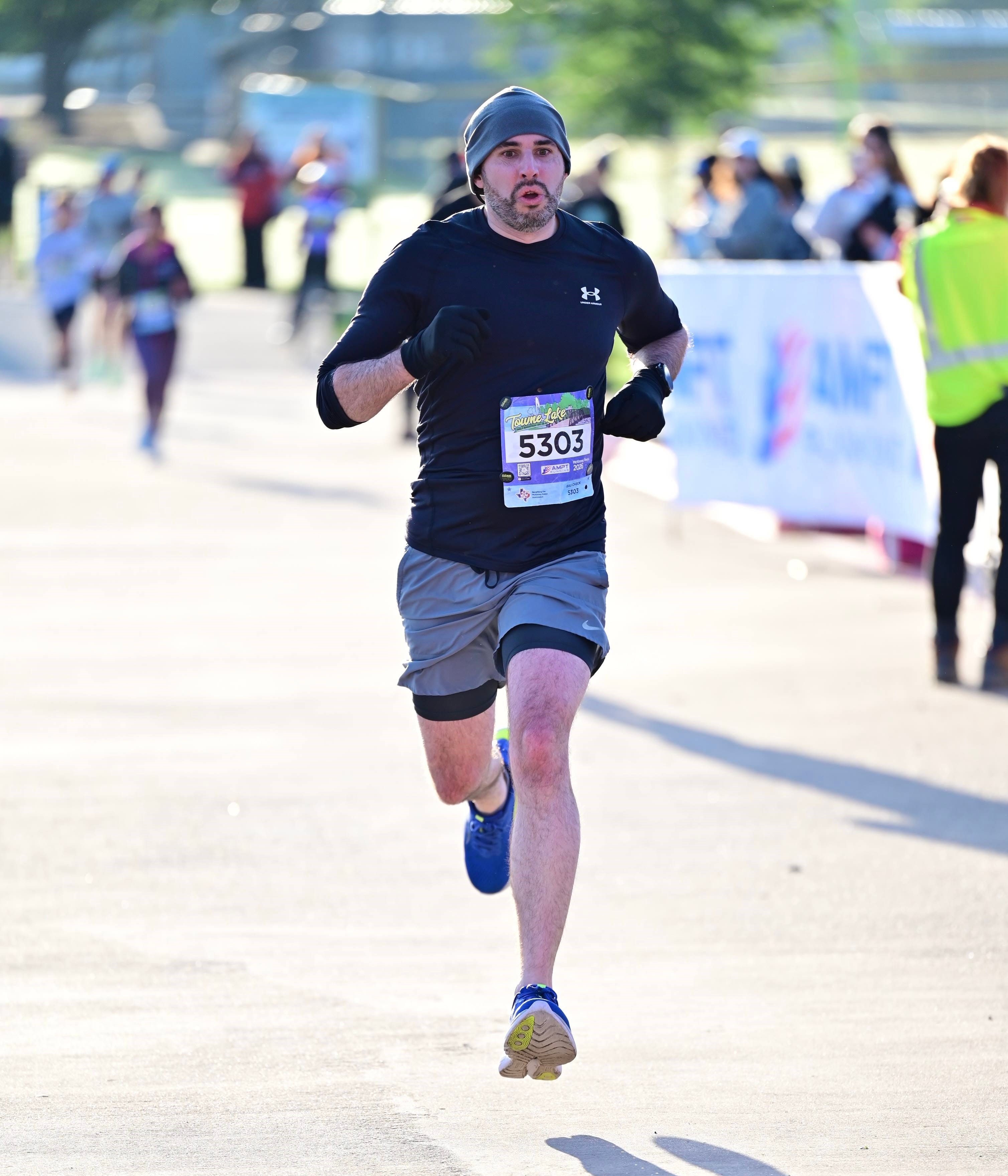
Many in the running community believe that to be a “real” runner, you have to run longer distances, like a half marathon or marathon. Look no further than those ubiquitous running bumper stickers. You see a lot of “26.2” and “13.1” stickers, but not a lot of “3.10686” stickers (that’s the exact distance of the 5K for you aficionados).
Surveys of runners bear this out. When asked about their favorite distances in a Running USA survey, 30 percent of respondents favored half marathons, compared to 17 percent who preferred 5Ks. Interestingly, 45- to 64-year-olds were 1.25 times as likely to prefer a marathon, compared to younger runners. That’s now my demographic, but I don’t see myself trending towards marathons any time soon.
In fact, over the past couple of years, I’ve fallen back in love with training for 5K races. While I’d been more of a cyclist in years prior, a few falls on my bike and close calls with enraged motorists sent me back to running. Here’s why I think 5K training plans are the ideal running workout.
#1. Training For Shorter Distances May Maximize Your Health Gains from Running
One great thing about the 5K distance is that it’s accessible—if you aren’t running now, it’s easy to start. There’s a reason the phrase “couch to 5K” exists.
But it’s not just about getting started. There’s plenty of evidence out there that when it comes to running, less may be better. I love this passage from “The 5K, Not The Marathon, Is The Ideal Race,” a FiveThirtyEight article written by Christie Aschwanden:
“Everyone thinks the marathon is the Holy Grail, when a lot of people should really be doing the 5K,” Jason Karp, an exercise physiologist and running coach, told me in an interview several years ago. Some people aren’t suited to long distances — their natural talents tend toward power and speed rather than endurance. And if you’re exercising for health and fitness, several studies suggest that moderate mileage, which is typical in a training plan for 5Ks, might provide a better way to get there.
Beyond the studies cited by the article, consider this fact: when you’re training for shorter distances, you can run faster. And running faster, or doing interval training, improves your “VO2 max,” a key indicator of heart health. A higher VO2 max means a lower risk for heart disease and better longevity. Since I started more seriously training for 5Ks, mine has gone up to 50, which would be considered excellent even when I was in my 30s!
#2. 5K Training Plans Are Schedule-Friendly
Initially, my wife and I had been focusing on trail races, and we’d signed up for some longer distances, including a 25K trail race. As a busy dad trying to balance my work, parenting and fitness routine, training for longer races felt forced. And that 25K trail race I mentioned…I switched my registration to the 5 mile distance, and it felt great.
The mental relief when I didn’t have to plan out a 12- to 15-mile training run every week felt liberating. That’s when I started getting serious about 5Ks.
There are numerous apps and free plans online to train for 5K races. You generally only need to run three times per week, for sessions that could range from 20 minutes to an hour. You also get a nice mix of different sessions, including speed intervals and/or tempo work, fartleks (much more fun than they sound!), hill repeats, progressive runs and easy runs.
#3. Strength Training Mixes Well With 5K Training Plans
This is a personal observation, having trained for longer distances like half marathons. The wear and tear my body faces when training for a 5K is exponentially lower than training for a longer run, even if my training plan mixes in one or two longer runs a week. Longer runs have always taken a toll on me, often leaving my knees and hips sore and aching. That doesn’t mix well with strength training.
With 5K plans, I find that I can mix in up to three strength workouts a week, including doing upper body on days when I run, if needed. Strength training is crucial over 40, so it should be prioritized along with your cardio plan.
#4. Speed Work on a Running Track is Fun
My biggest realization this year: maybe I should have listened to that coach who tried to get me to run track in high school. Speed workouts help improve your VO2 max, lower your resting heart rate and improve your race times.
There’s just something about hitting the track to run a 400- or 800-meter interval that makes you feel powerful. As I’ve done many interval workouts over the past few years, I’ve discovered a new love for trying to break my 400-meter personal record (right now, it’s 1:22, which is respectable for my age, I think). Sometimes, I even do 200- or 100-meter sprints, which truly become a leg workout on their own.
Speed workouts don’t have to be done on a track—it’s also good to do them on the road or on a paved trail, where the changing elevations match what you’ll see in a race.
#5. It’s Easy to Find 5K Races
The great thing about training for a race is that it gives you a goal to shoot for with a defined timeline. With 5Ks, there’s no shortage of races to choose from.
You can find both big and small races, and as you get faster, the small races can offer an extra reward, since you might have a chance to place in your age group. You can even buy multiple “packs” of races, to give yourself several race opportunities over a period of months.
Go Deeper: 5K Resources
Here are a couple of resources I’ve found useful in my 5K training.
5K Improvement Plans from RunningFastr: If you’re looking for offline, AI-free running plans, I’d recommend the plans by Matt over at RunningFastr. I’ve found these useful over the years, and there are plans depending on your ability and pace. As your pace improves, these plans work in different “breakthrough sessions,” like intervals, fartleks and hill repeats.
Runna App: There’s a reason Strava recently purchased Runna—it’s a helpful app, and the AI features continue to improve. Abbie and I shared about this app and other AI resources on a recent episode of the podcast.